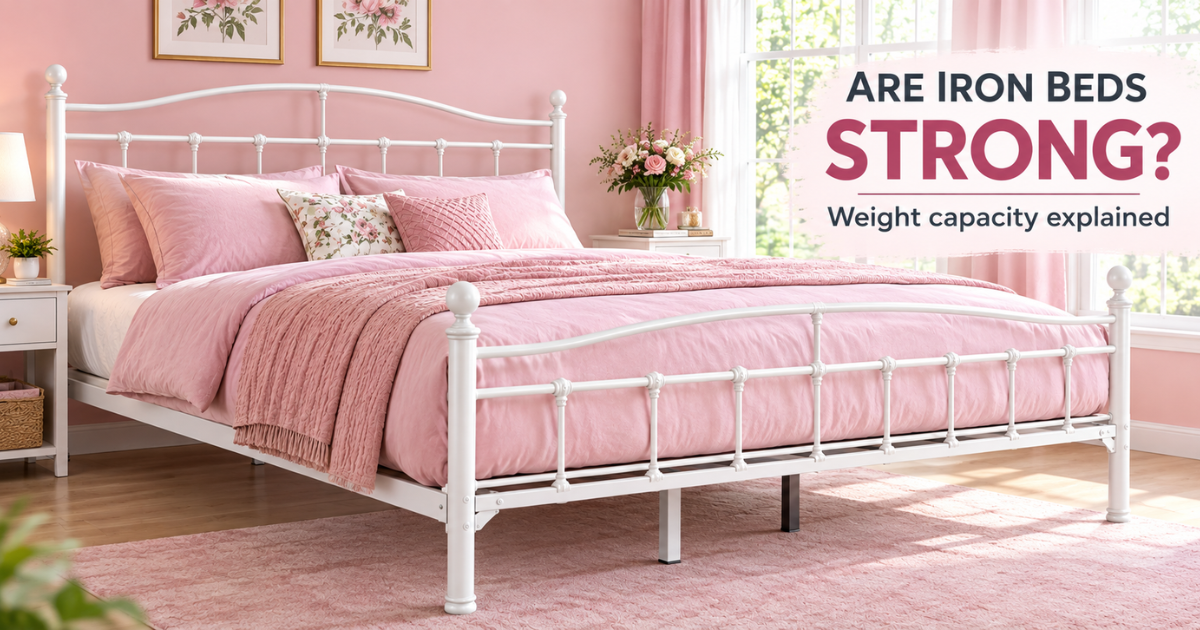
Yes, iron beds can be strong and durable, but their weight capacity depends on the frame’s design, materials, support structure, and manufacturer rating. A strong-looking ironAre Iron Beds Strong? Weight Capacity Explained
bed is not automatically suitable for every person or mattress, so checking its tested or stated weight limit is essential.
An iron bed can be a long-lasting choice for a bedroom, especially when it has a well-built frame, secure connections, and adequate support beneath the mattress. However, the word iron alone does not tell you how much weight the bed can safely carry.
Are Iron Beds Strong Enough for Everyday Use?
Iron and metal beds are widely used because they can combine structural strength with a relatively durable frame design. Some traditional iron beds are heavy and rigid, while many modern metal beds use steel tubing or other metal components.
The important difference is that strength comes from the complete structure, not just the material name. The thickness of the metal, shape of the frame, quality of the welds, number of support legs, slat arrangement, and connection hardware all influence performance.
For example, a bed with a strong outer frame but inadequate centre support may not distribute weight effectively across a wide sleeping surface. A smaller bed with a well-designed support system can have a different weight rating from a larger bed made from similar material.
This is why you should use the manufacturer’s specifications for the exact bed you are considering.
How Much Weight Can an Iron Bed Hold?
There is no single weight limit that applies to every iron bed. Published product specifications show substantial differences between models.
For example, one Dorel metal bed frame specification lists a 450-pound (approximately 204 kg) weight limit, while a different Dorel queen metal bed lists a 500-pound (approximately 227 kg) limit. A Pottery Barn Atwell metal bed lists a 500-pound limit for the full size and 600 pounds for the queen size.
These examples demonstrate that capacity depends on the individual product rather than simply its appearance or the fact that it is made of metal.
Some manufacturers also state whether the capacity includes the mattress, sleepers, or other items. Zinus, for example, specifies that certain listed weight limits exclude the mattress, while other manufacturers provide combined-load limits. Always check the instructions and product documentation before comparing numbers.
What Does a Weight Capacity Include?
The meaning of a weight limit is important. A stated capacity may include:
- One or more people sleeping on the bed.
- The mattress.
- Bedding and other items.
- The bed frame itself, depending on the manufacturer’s instructions.
Do not assume that a 450-pound rating always means 450 pounds of people alone. Confirm the definition for your specific model.
What Makes an Iron Bed Frame Strong?
1. Metal Thickness and Frame Construction
The thickness and shape of metal components influence their ability to resist bending and deformation. However, thicker metal by itself does not guarantee a stronger bed because the frame’s overall engineering also matters.
A bed with appropriately designed rails, reinforced connections, and a suitable support system can perform differently from one with thin or poorly supported components.
When shopping, look for product specifications that identify the material and construction method. If the manufacturer does not provide enough information, ask for the actual load rating and assembly requirements.
2. Centre Support and Legs
Wider beds often need additional support beneath the mattress platform. Centre rails, centre legs, and other support components help distribute the load across the bed.
The required arrangement depends on the frame design. Some beds use a centre support beam, while others rely on a different structure.
Do not add or remove support legs without checking the manufacturer’s instructions. An improvised change can affect stability, clearance, or the way weight is transferred through the frame.
3. Welds, Bolts, and Connections
The points where metal components join are important. A frame may have strong rails but still experience problems if its joints are poorly secured, damaged, or incorrectly assembled.
Bolted beds require the correct hardware and secure assembly. Over time, loose connections can contribute to movement, squeaking, or instability.
Check the instructions for maintenance and tightening. If you notice cracked welds, bent rails, or damaged support components, stop using the bed until it has been properly assessed or repaired.
4. Slats and Mattress Support
The mattress rests on a support surface, such as metal slats, wooden slats, or a platform. The strength and spacing of these components affect how the load is distributed.
Do not focus only on the headboard and side rails. The mattress support system also needs to be compatible with the mattress and the intended use.
For foam and other mattress types, check the mattress manufacturer’s support and spacing requirements before making a purchase.
Iron vs. Steel: Does the Material Matter?
The words iron bed and metal bed are sometimes used interchangeably, but they do not always describe the same construction.
Traditional decorative iron beds may use wrought iron, cast iron, or other materials. Modern metal bed frames frequently use steel components, including steel tubing.
Steel and cast iron have different physical properties, manufacturing methods, and structural characteristics. A material comparison alone cannot establish the capacity of a finished bed.
Instead of assuming that one material is always stronger, compare the complete product: its rated capacity, support design, connection quality, intended use, and manufacturer’s instructions.
How to Calculate the Weight Your Bed Needs to Support
Before buying an iron bed, estimate the total load that the manufacturer says the frame must support.
For example, imagine two sleepers weighing 75 kg and 85 kg, plus a mattress weighing 30 kg. Their combined weight is:
75 + 85 + 30 = 190 kg
This calculation is an example, not a recommended universal safety threshold. The next step is to compare the total with the correct manufacturer-defined capacity.
If the stated limit includes the mattress and sleepers, the example’s total would need to remain within that limit. If the manufacturer excludes the mattress from the rating, follow that definition instead.
Do not use a calculated total to override the manufacturer’s instructions, and do not assume that a bed is safe simply because your estimate is below a number found on a different model.
How to Choose an Iron Bed for Two People
If you plan to share the bed with a partner, check the product’s intended size and load rating before purchase.
Start by finding the official weight capacity for the exact size and model. Confirm whether the limit includes the mattress and whether it applies to the complete assembled bed.
Next, review the support structure. A wider frame may require centre support, and the bed should be assembled exactly as instructed.
Consider your mattress as well. A heavier mattress can change the total load, and the mattress must be compatible with the support surface.
If the manufacturer does not clearly explain the capacity or support requirements, ask for clarification before purchasing rather than relying on appearance or general claims about iron strength.
Signs That an Iron Bed May Not Be Strong Enough
Some warning signs deserve attention before or during use.
Visible cracks, bent rails, damaged welds, loose structural connections, or broken slats can indicate a problem. Excessive movement, unusual instability, or recurring joint separation should not be ignored.
Squeaking does not automatically mean that a bed is unsafe, but it can be associated with loose connections or movement between components. Investigate the source instead of assuming that every noise is harmless.
Avoid jumping or rough play on a bed unless the manufacturer explicitly designs and rates it for that use. Many bed instructions specifically warn against jumping or horseplay.
If a structural component is damaged, avoid continued use until the problem has been evaluated and corrected appropriately.
Common Mistakes That Reduce Bed Strength
One common mistake is ignoring the official weight rating because the frame looks thick or heavy. Appearance cannot replace the manufacturer’s specifications.
Another mistake is failing to account for the mattress. Depending on the product, the mattress may be included in the stated maximum load or excluded from it.
Incorrect assembly is another concern. Missing hardware, incorrectly installed supports, and loose fasteners can affect the stability of the frame.
A further mistake is placing the bed on unsuitable supports or modifying its structure without guidance. Follow the manufacturer’s assembly and usage instructions, including any restrictions on risers or alterations.
Is an Iron Bed Worth Buying?
An iron bed can be a practical choice if its construction, capacity, and support system match your needs. It may offer a durable frame and a traditional or modern appearance, depending on the design.
The most useful buying decision is not simply choosing the heaviest-looking bed. It is finding a model with a clearly documented capacity, appropriate mattress support, secure construction, and instructions that fit your intended use.
If you are buying an iron bed for two people or a heavier mattress, check the exact weight rating and its definition before making a final decision.
Conclusion
Iron beds can be a strong and durable choice for everyday use, but their actual strength depends on the frame’s construction, support system, and manufacturer-rated weight capacity. Before buying, check the bed’s weight limit, mattress weight, support legs, and overall build quality to ensure it meets your needs.
A well-designed iron bed can provide reliable support for years when properly assembled and maintained. Instead of judging a bed by its appearance alone, focus on verified specifications and the quality of its complete structure. The right iron bed is one that safely supports your needs, not simply one that looks strong.
You may also like: How to Remove Rust From an Iron Bed
FAQs
1. Are iron beds stronger than wooden beds?
Neither material is automatically stronger in every bed design. Compare the complete frame, construction, and manufacturer-rated capacity rather than assuming one material always performs better.
2. Should I avoid an iron bed if I am a heavier sleeper?
Not necessarily. Look for a model with a suitable documented weight capacity and support structure. If the rating is unclear or does not meet your needs, choose a different model or obtain confirmation from the manufacturer.
3. Can an iron bed last for many years?
A well-maintained bed can be durable, but lifespan depends on construction, usage, environmental conditions, and maintenance. Do not treat durability as a guarantee of indefinite safe use.
4. Does a heavy iron bed mean it can support more weight?
No. The physical weight of the bed does not, by itself, establish its safe load capacity. Check the manufacturer’s specifications for the complete model.
5. What should I check before buying an iron bed for two people?
Check the exact weight rating, whether the mattress is included, the centre support system, assembly requirements, and mattress compatibility. These details matter more than appearance alone.