
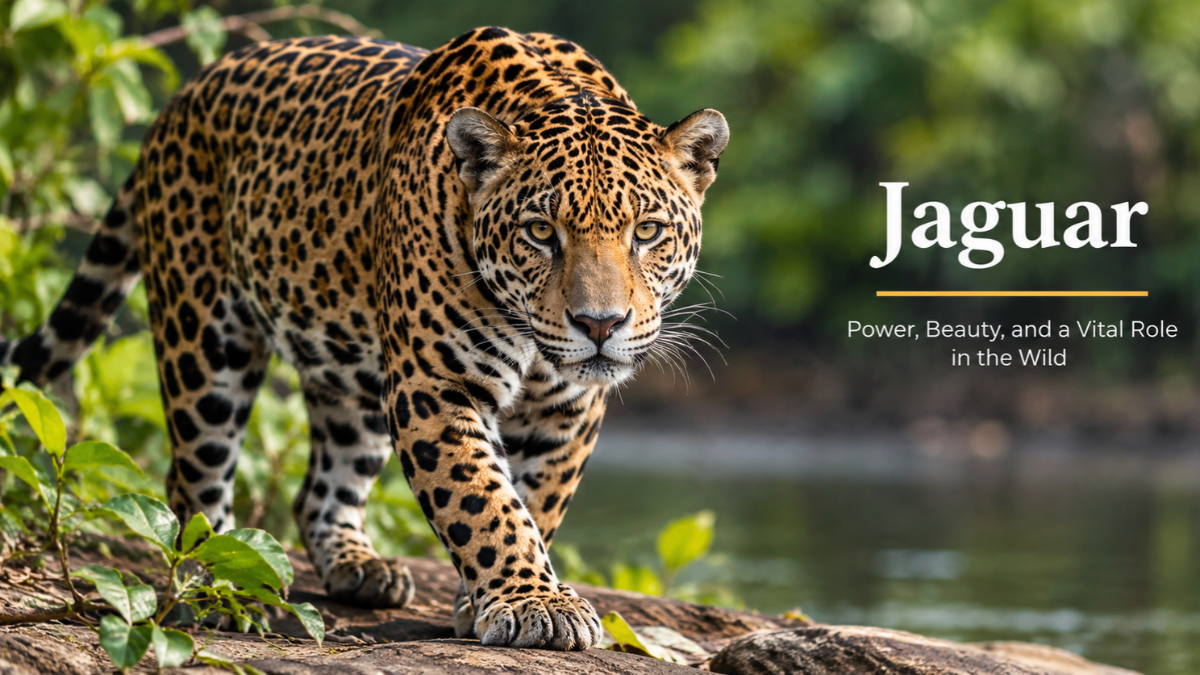
Jaguar can refer to the jaguar, a powerful wild cat native to the Americas, or Jaguar, the British luxury automotive brand. The meaning depends on the context: wildlife searches usually concern the species Panthera onca, while automotive searches may involve luxury vehicles, brand history, and new electric models.
Although the animal and the car brand share the same name, they are entirely different subjects. Understanding this distinction helps readers find accurate information, whether they are researching wildlife or exploring Jaguar’s automotive history.
What Does Jaguar Mean?
The word “Jaguar” is commonly associated with strength, distinctive appearance, and power, but its practical meaning depends on how it is used.
In wildlife discussions, a jaguar is a large member of the cat family, recognized by its muscular build and dark, patterned coat. It is the largest wild cat in the Americas and one of the world’s largest cats. Its scientific name is Panthera onca.
In automotive discussions, Jaguar refers to a British luxury vehicle brand known for performance-oriented cars, distinctive styling, and a long history of automotive design. The company has produced well-known vehicles, including the E-Type and XJS, and is now developing a new generation of electric vehicles.
What Is a Jaguar in the Wild?
The wild jaguar is a powerful predator with a compact, muscular body, strong jaws, and a golden or tawny coat marked by dark rosettes. These markings help it blend into its surroundings, especially among vegetation, dappled light, and forest shadows.
Jaguars belong to the genus Panthera, which also includes lions, tigers, and leopards. However, jaguars are a separate species with their own physical characteristics, habitat preferences, and hunting behavior.
One of their most remarkable features is their powerful bite. Jaguars are carnivores and opportunistic hunters, meaning they can prey on different animals depending on what is available in their environment. Their diet can include deer, peccaries, capybaras, armadillos, reptiles, and other suitable prey.
Unlike many people’s image of big cats as animals that avoid water, jaguars are strong swimmers. Rivers, wetlands, and other freshwater environments are important parts of their natural habitat.
Where Do Jaguars Live and What Do They Eat?
Jaguars are found across parts of Central and South America, with their range extending from Mexico toward Argentina. They inhabit several environments, including tropical forests, wetlands, savannas, and other wooded landscapes. Brazil contains a substantial share of the world’s wild jaguars.
The Amazon Basin is especially important because it supports extensive habitat and prey populations. However, jaguars are not limited to dense rainforest. Their ability to use different landscapes helps explain their presence across a broad geographic range.
Their diet is equally adaptable. Depending on location and opportunity, a jaguar may hunt mammals, reptiles, or other animals. The availability of prey, water, and suitable cover helps determine whether a landscape can support a healthy population.
This relationship also explains why habitat protection matters. Preserving an area of forest without maintaining connections to other suitable habitats may not be enough for animals that need substantial territory.
How Can You Recognize a Jaguar?
Jaguars are sometimes confused with leopards because both have yellowish coats and dark rosette-shaped markings. However, several physical differences can help distinguish them.
A jaguar generally has a stockier build, a broader head, and larger, more complex rosettes. Many jaguar rosettes contain one or more dark spots in the center, while leopard markings are usually smaller and more tightly grouped. These are useful identification clues, although coat patterns can vary.
Geography provides another clue. Jaguars are native to the Americas, whereas leopards naturally occur in Africa and parts of Asia.
| Feature | Jaguar | Leopard |
| Native range | Central and South America, with a limited northern range | Africa and parts of Asia |
| Typical build | Stocky and muscular | Generally more slender |
| Coat pattern | Larger rosettes, often with central spots | Usually smaller, closely spaced rosettes |
| Relationship to water | Strong swimmer and often associated with freshwater habitats | Also capable of swimming, though habitat use varies |
These are general comparisons rather than absolute identification rules. Seeing a single marking or body feature is not always sufficient to identify an animal correctly.
What Does Jaguar Mean? Wild Cat and Luxury Car Brand
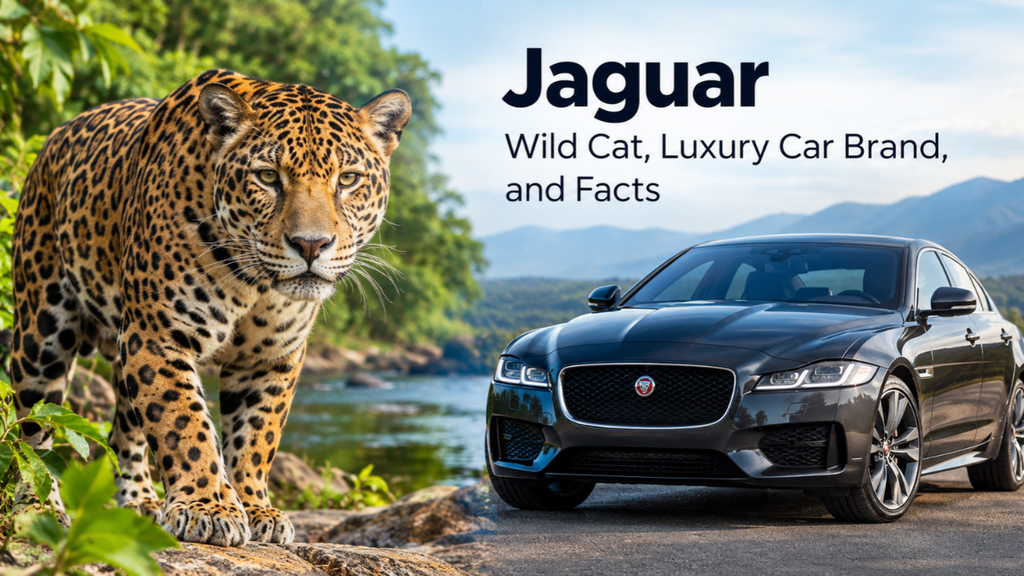
The word Jaguar has two popular meanings: a powerful wild animal and a famous luxury car brand. The jaguar (Panthera onca) is a large wild cat native to the Americas, known for its muscular body, golden coat, and distinctive black rosette patterns. It is an excellent hunter and an important part of its natural ecosystem. On the other hand, Jaguar is a British luxury automotive brand recognized for its stylish vehicles, performance, and innovative automotive designs. Although the animal and the car brand share the same name, they are different subjects. The jaguar represents the beauty and strength of wildlife, while Jaguar cars are associated with luxury, engineering, and automotive design. Understanding both meanings helps readers explore the fascinating world of this wild cat and the history of the well-known car brand.
Why Are Jaguars Important to Nature?
Jaguars play an important role in their ecosystems because they are top predators. By hunting other animals, they help influence prey populations and contribute to the balance of the food web.
Their presence also makes them an important focus for conservation efforts. Protecting the large areas they need can benefit other wildlife that share the same landscapes.
Nevertheless, jaguars face substantial pressures. Habitat destruction, fragmentation, illegal wildlife trade, declining prey availability, and conflict with people can threaten local populations. When forests are cleared or divided into smaller isolated areas, jaguars may have fewer opportunities to hunt, reproduce, and move between suitable habitats.
WWF currently describes the jaguar as Near Threatened. That classification should not be interpreted as meaning the species is safe everywhere: conditions differ between regions, and local populations can face serious risks even when the species’ global assessment is less severe than the highest threat categories.
Protecting connected habitats, supporting responsible land management, and reducing conflict between people and wildlife are important parts of long-term conservation.
What Is the Jaguar Car Brand?
Jaguar is a British luxury automotive brand with a heritage that includes performance cars, elegant styling, and distinctive grand touring vehicles. Its historical lineup includes the E-Type, widely associated with classic sports-car design, and the XJS, another notable model in its history.
The company has also been moving toward an electric future. This transition makes current Jaguar searches different from those that focused mainly on the brand’s traditional petrol-powered models.
Anyone researching Jaguar cars should distinguish between historical vehicles, cars available through the used market, and models announced for future production. Availability, pricing, equipment, and warranty details can differ by model and country.
For a potential buyer, the most useful next step is to consult official regional information and verify the vehicle’s actual market availability rather than assuming that a model shown in international news can already be ordered locally.
What Is the New Jaguar Type 01?
The Jaguar Type 01 is a new electric four-door grand touring car that the brand unveiled in New York on 6 October 2026. In its official announcement published the following day, Jaguar described it as the beginning of a new era for the brand. The company stated that orders would open in early 2027, with prices starting at £130,000. These are manufacturer-announced details, not a confirmation of local availability in every market.
The Type 01 represents an important development in Jaguar’s move toward an all-electric vehicle portfolio. Its design draws a connection to the brand’s earlier cars while presenting a different interpretation of a modern luxury grand tourer.
Because the car has only recently been unveiled, prospective buyers should distinguish announced specifications and company claims from independent road-test results, final regional configurations, and confirmed delivery dates.
For people following Jaguar’s automotive future, the Type 01 is a more precise search topic than the single word “Jaguar.” It also illustrates why current information matters: brand lineups and announced products can change over time.
How to Find the Right Jaguar Information
The best way to research Jaguar is to use additional words that match your actual question.
For wildlife information, searches such as “Jaguar animal habitat,” “jaguar diet,” and “jaguar vs leopard” direct attention toward biology and conservation. Scientific sources and established wildlife organizations are useful starting points.
For automotive information, searches such as “Jaguar car history,” “Jaguar Type 01 availability,” or “Jaguar ownership costs” are more specific. Use official manufacturer information for announcements and regional specifications, then consult independent reviews for practical assessments.
This simple distinction also helps website publishers. A general article can clarify the shared name, but a dedicated wildlife guide or car-model guide can better answer readers with a specific goal.
Conclusion
Jaguar is a name that connects two very different subjects: one of the most recognizable wild cats in the Americas and a British luxury automotive brand. The animal is notable for its powerful build, distinctive coat, adaptable hunting behavior, and ecological importance, while the car brand is entering a new phase centered on electric grand touring vehicles.
Understanding the context is the key to finding reliable Jaguar information. For wildlife readers, the priority is accurate biology and conservation; for automotive readers, it is verified model details, availability, and current manufacturer announcements.
You may also like: Valplekar
FAQs
Is a jaguar an animal or a car brand?
Both meanings are widely used. A jaguar is a wild cat native to the Americas, while Jaguar is a British luxury automotive brand.
Are jaguars endangered?
WWF currently lists jaguars as Near Threatened. Habitat loss, fragmentation, illegal trade, and human-wildlife conflict remain important conservation concerns.
Is a jaguar the same as a leopard?
No. They are different cat species. Jaguars are native to the Americas, while leopards occur in Africa and parts of Asia. Jaguars usually have a stockier build and larger rosettes, many with central spots.
What is the Jaguar Type 01?
The Type 01 is Jaguar’s newly unveiled electric four-door grand touring car. The manufacturer announced that orders would open in early 2027.
Why does Jaguar have more than one search meaning?
The animal’s name is also used by the automotive brand. Readers can distinguish the intended meaning by adding context words such as “habitat,” “wildlife,” “cars,” or a specific model name.