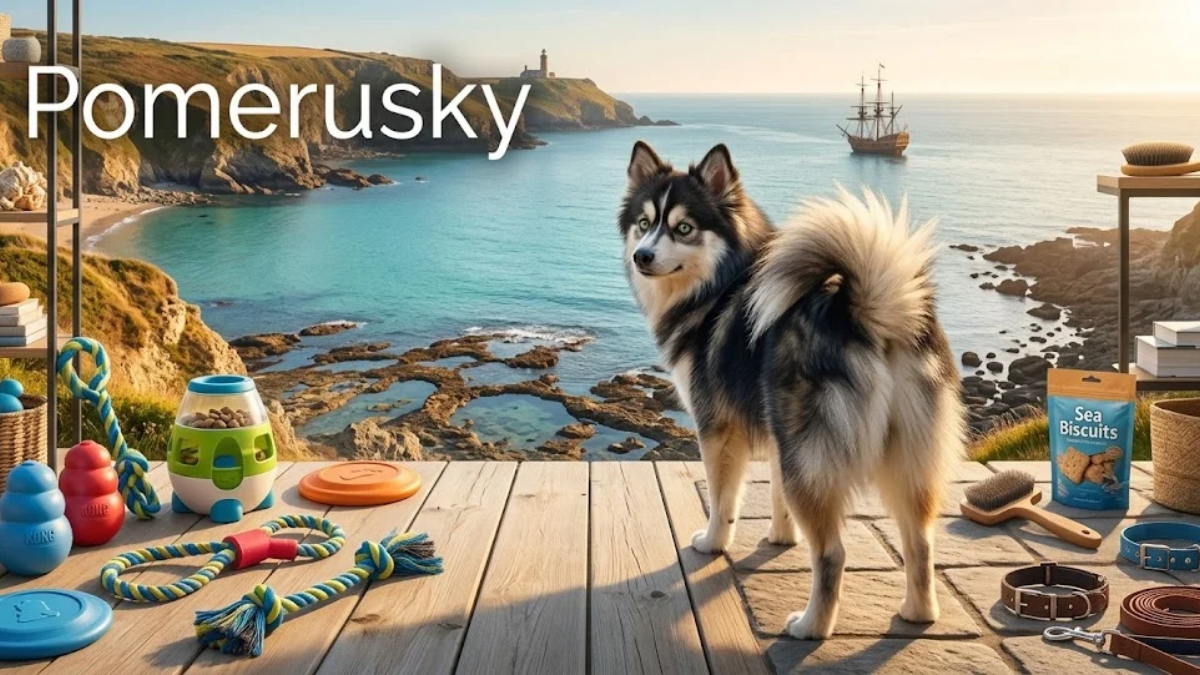
A Pomerusky is generally used to describe a mix between a Pomeranian and a Siberian Husky, and the same cross is more commonly called a Pomsky. It is not a standardized purebred with one fixed appearance or personality, so individual dogs can inherit noticeably different traits from either parent.
What Is a Pomerusky?
The Pomerusky combines two very different breeds. The Pomeranian is a small companion dog known for its fluffy coat, lively personality, and intelligence, while the Siberian Husky is a medium-sized working breed known for endurance, athleticism, and a strong desire for activity.
That combination is what makes the Pomerusky interesting. Some dogs may look Husky-like strongly, while others can have more obvious Pomeranian characteristics. Coat texture, facial markings, body structure, eye color,r and personality can all vary.
This variation is important for anyone considering a Pomerusky. A puppy should not be selected solely because it resembles a particular photograph online.
Pomerusky vs. Pomsky: Are They the Same?
In most cases, Pomerusky and Pomsky refer to the same basic Pomeranian-Husky mix. Pomsky is the shorter and more established name, while Pomerusky makes the parent breeds more obvious in the name.
The terminology can vary between breeders and websites, so prospective owners should look beyond the label. Parentage, health information, temperament, and the conditions in which the puppies are raised are more useful when evaluating a dog.
What Does a Pomerusky Look Like?
There is no single appearance that applies to every Pomerusky. Many have a fluffy double coat, upright ears, a plumed tail,l and facial features that remind people of a Siberian Husky.
Some may have blue, bro,wn or differently colored eyes, but eye color should not be treated as a requirement of the mix. Coat colors and markings can also vary.
The most useful expectation is therefore variation rather than a guaranteed “miniature Husky” appearance.
How Big Can a Pomerusky Get?
Pomeruskies can vary considerably in size because their parent breeds are very different in body structure.
The Pomeranian is a very small toy breed, while the Siberian Husky is a much larger athletic breed. As a result, there is no single reliable adult size that applies to every Pomerusky.
If size is important to you, ask about the puppy’s parents and previous generations rather than relying on a seller’s prediction alone. A puppy’s current size does not guarantee exactly how the adult dog will develop.
What Is the Pomerusky Temperament Like?
A Pomerusky can be intelligent, playful, energetic,c and highly social, but temperament is not completely predictable.
The Pomeranian contributes traits such as alertness, confidence, and companionship, while the Siberian Husky contributes athleticism, curiosity, and a strong need for activity. The result can be an entertaining and affectionate companion, but it can also be demanding.
Potential owners should be prepared for a dog that needs interaction rather than simply expecting a small, low-maintenance pet.
How Much Exercise Does a Pomerusky Need?
Exercise requirements depend on the individual dog’s age, health, size, and inherited traits. However, the Husky side means prospective owners should not automatically assume that a small body means very little exercise.
Daily walks, play sessions, and mentally stimulating activities can help prevent boredom. Training games, food puzzles and controlled outdoor activities can also give an intelligent dog something constructive to do.
Exercise should be increased gradually for puppies, and a veterinarian can provide guidance appropriate to the individual dog.
Grooming and Shedding
APomeraniany may have a dense double coat, which means grooming should be part of the normal routine.
Regular brushing helps remove loose hair and keep the coat manageable. Shedding can become particularly noticeable during seasonal coat changes, depending on the individual dog.
Owners should also maintain nails, ears,s and dental hygiene as appropriate. Professional grooming may be useful when an owner is uncomfortable handling a thick coat or when the dog’s coat becomes difficult to manage.
Training a Pomerusky
Early training and socialization are important. Both parent breeds are intelligent, but intelligence does not automatically mean that a dog will obey every command.
Short, consistent training sessions using positive reinforcement can make learning easier. Basic skills such as recall, leash behavior, settling down, handling, and household manners should be introduced early.
Because Siberian Huskies can have a strong desire to run, owners should take outdoor safety seriously. A secure environment and reliable leash habits are particularly important.
Pomerusky Health Considerations
Because the Pomerusky is a relatively recent cross, health expectations should be approached carefully rather than relying on claims that the mix is automatically healthier than either parent breed.
PetMD notes that available health information for Pomskies remains limited and discusses issues including patellar luxation among conditions reported in the cross. Veterinary care, preventive medicine, and appropriate health screening therefore matter.
The most useful question is not simply “Is a Pomerusky healthy?” but rather “What health information is available about this particular puppy and its parents?”
Before getting a puppy, ask for appropriate veterinary records and available health testing for the parents. A responsible breeder should be willing to discuss known health concerns instead of presenting the mix as risk-free.
Feeding and Everyday Care
A Pomerusky should receive a complete and balanced diet appropriate for its age, size,e and health status. Puppies, adults, ts and dogs with specific medical requirements can have different nutritional needs.
Avoid choosing food or supplements simply because they are marketed for designer dogs. Your veterinarian can help determine an appropriate diet based on the individual dog’s condition and lifestyle.
Fresh water, regular veterinary examinations, parasite prevention, and dental care should also form part of normal ownership.
Is a Pomerusky Good for Families and Apartments?
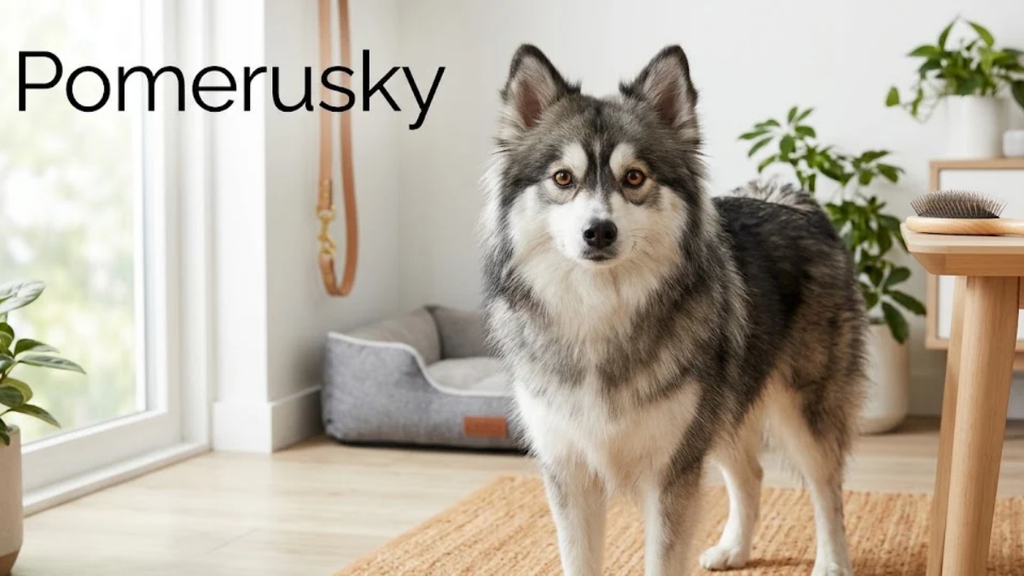
A Pomerusky can potentially fit into different household environments, but the dog’s individual temperament and the owner’s ability to provide exercise and companionship matter more than the size of the home alone.
The Pomeranian can adapt well to city and suburban living, while the Siberian Husky brings considerably greater activity requirements. This means an apartment can work for some individual dogs if their physical and mental needs are properly met, but simply having a small dog does not eliminate the need for exercise.
Families should also consider the dog’s size and temperament when young children are involved. Children should be taught how to handle dogs safely and respectfully.
What Should You Check Before Getting One?
Before choosing a Pomerusky puppy, look beyond photographs and social-media videos.
Ask about the puppy’s parents, veterinary history, available health testing, vaccination and parasite-control records, socialization, living conditions, and feeding routine. Ask what happens if a health or ownership problem develops after purchase.
It is also useful to meet the mother when possible and observe how the puppies interact with people and their surroundings. A seller who focuses almost entirely on unusual eye color or “mini Husky” appearance without discussing health and temperament deserves additional scrutiny.
Is a Pomerusky Right for Your Lifestyle?
A Pomerusky can be appealing because it combines the distinctive appearance of a Husky with characteristics associated with the much smaller Pomeranian. But appearance should be only one part of the decision.
The right owner is someone prepared for grooming, training, exercise, companionship, and normal veterinary responsibilities. Anyone wanting a guaranteed adult size, predictable appearance,e or very low-maintenance dog should be cautious about making assumptions based only on the Pomerusky label.
The key is to evaluate the individual dog, its parents, and your own daily routine together. That approach gives you a much clearer picture than the name “Pomerusky” alone.
Comparison Table
| Factor | Pomerusky | Pomeranian | Siberian Husky |
| Type | Hybrid/mix | Purebred | Purebred |
| Size | Variable | Very small | Medium |
| Coat | Usually dense/fluffy | Dense double coat | Dense double coat |
| Activity | Variable to active | Lively | High |
| Predictability | Lower | Higher | Higher |
| Grooming | Usually regular | Regular | Regular |
| Main consideration | Individual variation | Small size | Exercise and endurance |
The parent-breed differences are documented by AKC, while veterinary information on Pomskies emphasizes that the cross itself can show variation and has a comparatively limited health-data history.
Conclusion
A Pomerusky is best understood as a Pomeranian-Husky mix rather than as a perfectly standardized dog breed. Its appearance can be striking, but responsible ownership depends on understanding its variable genetics, exercise needs, grooming requirements, training, health considerations,s and the history of the individual puppy.
You may also like: Narutas Viesulo Kronikos
FAQs
What exactly is a Pomerusky?
A Pomerusky generally refers to a Pomeranian and Siberian Husky mix, commonly known as a Pomsky.
Is a Pomerusky the same as a Pomsky?
In most cases, yes. The two names are commonly used for the same basic cross.
Should I avoid getting a Pomerusky because it is a hybrid?
Not automatically. The important considerations are the individual dog’s health, temperament, parentage, care requirements, and whether those needs fit your lifestyle.
What do people often overlook about Pomeruskies?
Their size can be misleading. A smaller dog may still inherit substantial activity, intelligence, and companionship needs from its Husky parent.
Can a Pomerusky live in an apartment?
Potentially, depending on the individual dog and the owner’s ability to provide sufficient physical activity, mental stimulation,n and companionship.