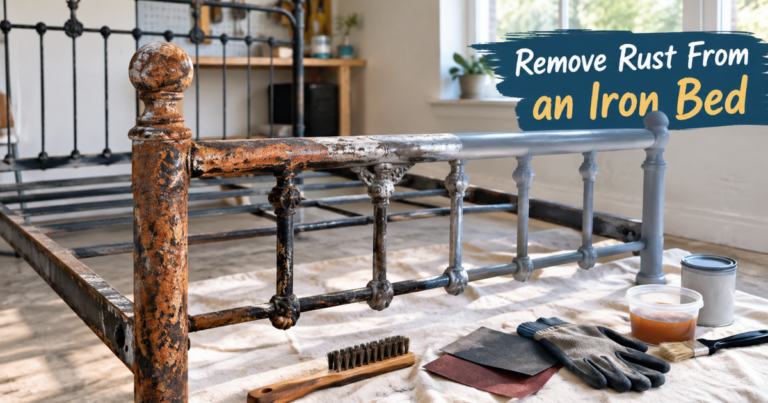
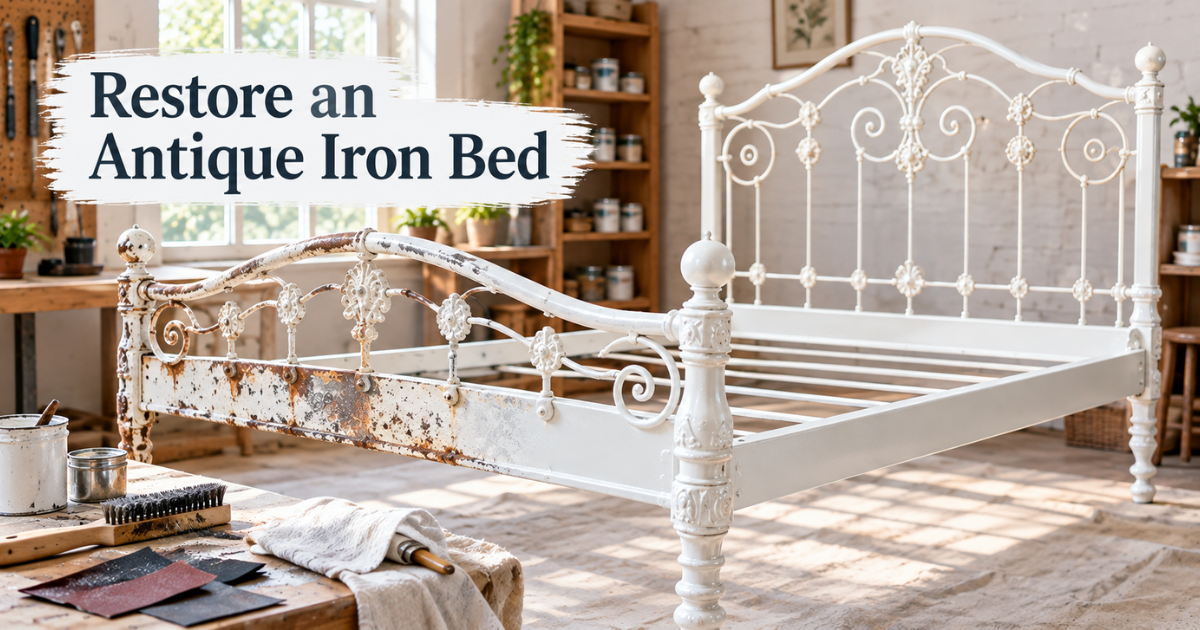
To restore an antique iron bed, inspect and document its condition before removing paint or rust, then clean the metal, repair structural issues, prepare the surface, and apply a suitable protective finish. The best restoration doesn’t just make an old bed look new; it preserves useful original details while making the frame clean, stable, and suitable for continued use.
Assess the Bed Before You Strip Anything
The first mistake is reaching for a wire brush or paint stripper before understanding what you have.
Place the bed somewhere with good light and examine the headboard, footboard, side rails, joints, decorative sections, and feet. Look for cracks, holes caused by corrosion, loose connections, bent parts, missing hardware, and areas where the metal has become unusually thin.
Take photographs before disassembly. Mark or label components where necessary so you can remember how the frame fits together.
Also measure the frame. Antique beds were not necessarily made to modern mattress dimensions, and some older frames require replacement rails or modified support systems. Restoration guides specifically recommend checking dimensions before assuming a modern mattress will fit.
Decide Whether You Need Restoration or Refinishing
Restoration and refinishing are not always the same thing.
If the bed has substantial original paint, decorative finishes,s or other historic surface details, removing everything may erase useful evidence about its construction and appearance. The Canadian Conservation Institute notes that coatings on historic iron can contain important historical information and recommends caution when cleaning painted or plated objects.
A bed with badly peeling modern paint may be a good candidate for complete refinishing. A rare or especially original frame may deserve a more conservative treatment.
Before stripping, ask a simple question: Am I trying to preserve the antique, or simply give an old bed a new finish?
That decision should guide the entire project.
Clean Dirt, Grease,e and Loose Rust
Begin with the least aggressive cleaning method that can achieve the result you need.
Remove loose dirt, dust, cobwebs,s and surface grime first. A mild detergent solution and soft or moderately abrasive cleaning tools may be enough for a lightly dirty frame. Dry the metal thoroughly afterward because moisture accelerates iron corrosion. Basic conservation guidance explains that iron corrodes when exposed to water and oxygen, with corrosion becoming more likely as moisture increases.
Do not soak an assembled bed unnecessarily, particularly where moisture could remain inside joints or hollow sections.
After cleaning, inspect the surface again. You will now have a much clearer idea of which areas actually need rust or paint removal.
Remove Old Paint Carefully
If the existing coating is failing badly and you have decided to refinish the bed, remove loose and unstable paint using an appropriate method.
Hand scraping, abrasive paper, wire brushing, and suitable paint-removal products can all have a place depending on the finish and condition. Older restoration guides describe using wire brushes, sanding, and paint stripper, but the correct method depends heavily on the condition of the surface.
Do not assume that the most aggressive method is automatically the best. Decorative iron contains curves, thin sections, and small details that can be damaged by careless mechanical cleaning.
Old paint also deserves special attention from a safety perspective. The U.S. EPA explains that disturbing lead-based paint can generate hazardous dust and recommends lead-safe practices for relevant renovation work involving older coatings. Its current guidance was updated in March 2026.
Because an antique bed may have several unknown layers of historic paint, testing or professional advice is sensible before aggressive sanding, blasting or stripping.
Deal With Rust and Corrosion
Not every brown or black area should be treated the same way.
The Canadian Conservation Institute distinguishes stable corrosion from active corrosion. Loose flakes, powdery rust, and signs of continuing corrosion are more concerning than a compact, adherent surface layer. Extensive corrosion with loose material or deteriorating sections may require a metals conservator rather than routine DIY cleaning.
For ordinary restoration, remove loose rust without unnecessarily grinding away sound metal. Fine abrasive work can then smooth remaining rough areas.
The goal is not to make every part of the antique look perfectly machined. The goal is to create a stable, clean surface appropriate for the finish you have chosen.
Special treatments such as tannic acid exist for certain rusted iron objects, but the Canadian Conservation Institute notes that tannic acid produces a blue-black surface and is not suitable for objects that were originally brightly finished or painted.
Repair Structural Problems Before Painting
Never use paint to hide a structural problem.
If a rail is cracked, a joint is badly damaged, or corrosion has created a hole, repair the metal before applying primer and finish coats. Existing restoration guidance recommends professional welding where an antique iron frame has rusted-through sections or significant breaks.
Conservation guidance also emphasizes that repairs to historic iron can permanently alter the object, so valuable or historically important pieces should be assessed before welding, riveting,g or other major interventions.
This is particularly important for beds because the finished frame is supporting a person, mattress, and bedding. Cosmetic restoration should never take priority over structural stability.
Prepare the Iron for Primer
Once rust, dirt,t and failing paint have been addressed, clean the surface carefully so it is free from dust, grease, and residue.
This stage has a major effect on the final result. Historic cast-iron guidance from the National Park Service notes that poorly prepared surfaces can cause even good paint systems to fail.
Pay special attention to decorative grooves and joints. Residue left in these areas can become a weak point beneath the new finish.
The metal should be completely dry before priming.
Prime and Paint the Restored Bed
Choose a primer specifically intended for the type of metal and coating system you are using.
The exact paint system should follow the manufacturer’s instructions, including drying times, temperature requirements, and compatibility between primer and finish coat. Historic-metal guidance also stresses that coating performance depends heavily on proper preparation.
For a traditional appearance, black remains an obvious choice, but antique iron beds have also appeared in lighter and decorative finishes. The important issue is not simply color; it is whether the new finish suits the bed and the level of restoration you are aiming for.
Apply thin, even coats rather than trying to cover everything heavily in one pass.
Let each coat dry and cure according to the product instructions before handling or assembling the frame.
Preserve Original Details and Character
This is where a good restoration can become much better than a generic makeover.
Look closely at original finials, medallions, cast details, unusual fasteners, decorative lines, es and surviving finishes. These features can tell you how the bed was originally made and finished.
A perfectly smooth modern coating may look attractive, but it can remove much of the character that makes an antique bed interesting in the first place.
For historically significant pieces, a conservation-minded approach may be more appropriate than stripping the frame completely.
Reassemble and Check the Bed
Once the finish has fully cured, reassemble the frame carefully.
Check every connection, rail, and fastener. Make sure the headboard and footboard are stable, the side rails engage correctly,y and the frame sits level.
Do not forget that restoration is not complete merely because the paint looks good.
Check the mattress-support arrangement as well. Antique dimensions can differ from modern standards, and some frames require replacement hardware or another suitable support solution.
Prevent Rust From Returning
Rust prevention starts with controlling moisture.
Iron corrodes when water and oxygen reach the metal, and higher humidity can accelerate the process. Regular inspection and a dry environment are therefore important parts of long-term care.
Avoid placing the restored bed where condensation or persistent dampness is likely. Clean spills promptly and inspect small chips or scratches in the finish before corrosion has an opportunity to spread.
A restored iron bed should be treated as a maintained object, not a project that is finished forever.
Common Restoration Mistakes to Avoid
One common mistake is stripping an antique bed before determining whether its existing finish has historical value.
Another is aggressively grinding rust and removing good metal along with corrosion. A third is painting before repairing structural damage.
Poor surface preparation is another frequent cause of coating failure. Historic cast-iron guidance emphasizes that even a good paint product cannot compensate for an inadequately prepared surface.
Finally, rushing drying and curing times can compromise an otherwise careful restoration.
The strongest results usually come from taking more time during preparation rather than adding more coats of paint at the end.
When a Professional Conservator or Welder Is Needed
DIY restoration makes sense when the frame is structurally sound, and the work is mainly cleaning, surface preparation, and refinishing.
Professional help becomes more appropriate when you find major cracks, rust-through, missing structural sections, severe active corrosion, or historically important original finishes.
The Canadian Conservation Institute specifically recommends professional conservation assistance for iron objects with extensive active corrosion and notes that historic repairs can require careful judgment.
The same principle applies to safety-critical repairs: a beautifully painted bed is not a successful restoration if the underlying frame is unsafe.
Is Restoring an Antique Iron Bed Worth It?
For a sound frame with attractive detailing, restoration can preserve the character of an older piece while making it practical for modern use.
The most valuable approach is not necessarily the one that produces the newest-looking finish. It is the one that balances structural safety, corrosion control, appearance,e and preservation of the bed’s original character.
That distinction is what separates a simple repaint from a thoughtful antique iron bed restoration.
Conclusion
Restoring an antique iron bed is mainly a process of careful assessment, controlled cleaning, corrosion treatment, structural repair, and appropriate refinishing. The most important decision happens before the first layer of paint comes off: determine whether the bed needs a complete refinish or a more conservative restoration that preserves original character.
You may also like: jernsenger
FAQs
Should I remove all the old paint from an antique iron bed?
Not always. If original paint or decorative surface treatment may have historical value, complete stripping can remove useful evidence about the bed. Conservation guidance recommends caution with historic coatings.
Should I avoid sandblasting an antique iron bed?
Not automatically, but aggressive abrasive blasting can be inappropriate when original finishes or delicate details need preservation. The correct method depends on the bed’s condition and restoration goal.
Can rust come back after an antique iron bed is restored?
Yes. Iron remains vulnerable to corrosion when moisture and oxygen reach the surface. Keeping the frame dry and inspecting damaged areas of the coating helps reduce the risk.
What is the most overlooked part of antique iron bed restoration?
Structural inspection is often overlooked. A frame can look excellent after painting while still having damaged rails, weak joints, or corrosion-related problems underneath.
When should I stop doing the restoration myself?
Stop when the project involves major structural damage, severe active corrosion, uncertain historic finishes, or repairs that require welding or specialist conservation judgment. The Canadian Conservation Institute recommends professional assistance for extensively corroded iron objects.