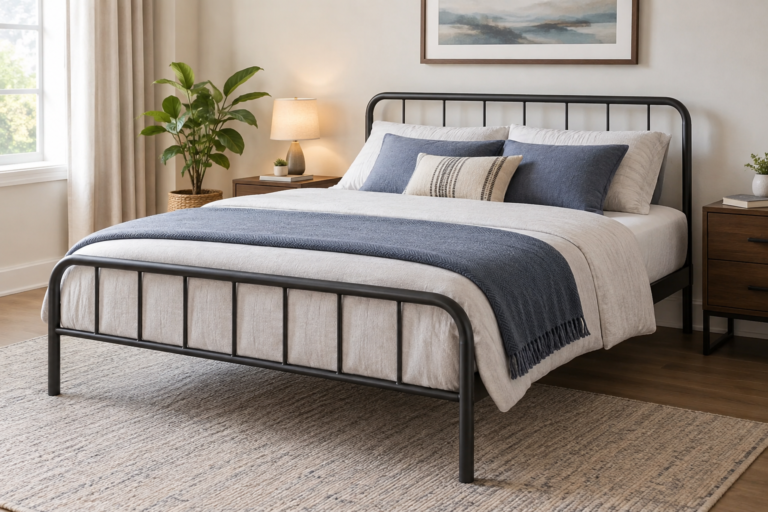
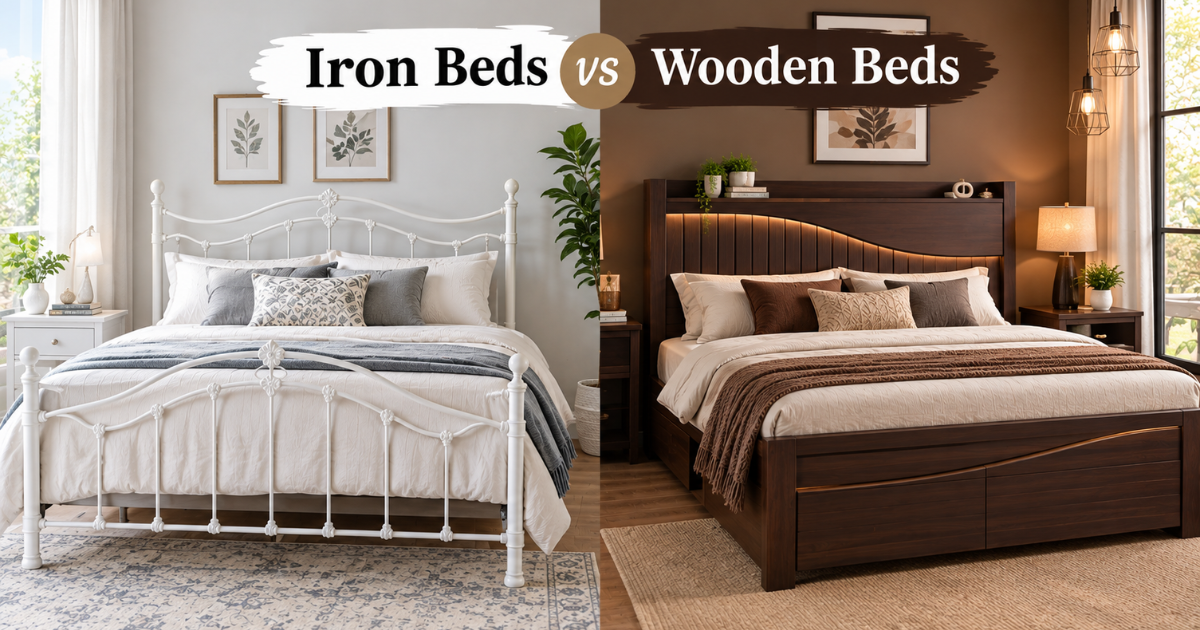
Iron beds are generally easier to maintain and resistant to termites, while wooden beds offer natural warmth, quieter construction, and more design flexibility. The better choice depends less on the material’s name and more on construction quality, room conditions, maintenance, and the style you want.
Choosing between iron beds vs wooden beds can look like a simple style decision, but the difference becomes more noticeable after years of everyday use. Metal and wood behave differently when exposed to humidity, movement, scratches, loose joints, and regular cleaning, and both can be excellent when properly constructed.
Iron Beds vs Wooden Beds: What Is the Real Difference?
An iron bed uses a metal structure, which may be made from solid iron, steel sections, or metal tubing depending on the design. A wooden bed can range from solid hardwood construction to engineered wood products, so the category itself covers a wide range of quality.
That distinction matters.
A well-built solid-wood bed should not be compared directly with a low-cost engineered-wood frame. Likewise, a substantial iron frame is different from a lightweight metal frame made from thin tubing.
So instead of asking only “iron or wood?”, ask what material, what construction, what finish, and what support system am I actually buying?
How Durability Changes Between Iron and Wood
Iron and steel have an advantage in resisting problems such as warping and termite damage. Metal frames also do not absorb moisture in the same way timber does. However, exposed or poorly protected metal can develop rust, particularly where the protective finish has been damaged.
Wood can be extremely durable too. Quality hardwood furniture can remain usable for decades and can often be sanded, repaired,, or refinished when its surface becomes damaged. However, wood is affected by environmental conditions, and humidity can contribute to movement, swelling, cracking, or loose joints over time.
This means there is no universal lifespan number that applies to every iron or wooden bed. Construction quality is one of the most important variables.
Which Bed Is Easier to Maintain?
For routine cleaning, an iron bed is usually straightforward. Dust can be removed from the metal surface,e and the frame can be wiped when necessary.
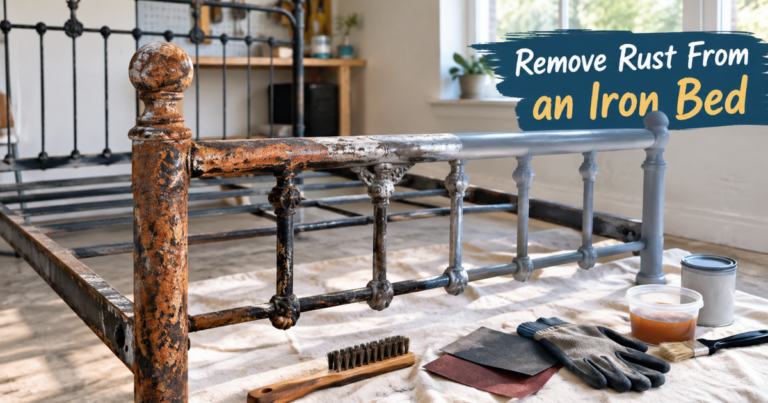
The main maintenance issue is rust prevention. Scratches or damaged coating should not simply be ignored if they expose the underlying metal, particularly in a damp environment.
Wood requires a different type of care. Spills should be cleaned promptly, dust should be removed regularly, and the room should have reasonable ventilation. Wood-care guidance commonly recommends protecting timber from excessive moisture and maintaining its finish.
So if minimum routine maintenance is your priority, an appropriately finished iron or metal frame may be simpler.
Which Looks Better in a Modern or Traditional Bedroom?
This comes down largely to personal taste.
Iron beds can create a lighter visual appearance because many designs use open rails, thin profiles and decorative metalwork. They can work particularly well in minimalist, industrial, contemporary or traditional interiors depending on the design.
Wooden beds usually provide a warmer visual presence. Visible grain, natural colour and substantial headboards can make the bed a major feature of the room.
A wooden bed can also be easier to match with other timber furniture because the material creates a consistent visual connection.
Neither material is automatically more attractive. The better match is the one that fits the room rather than simply following a general trend.
Are Iron Beds Noisier Than Wooden Beds?
Either type can become noisy.
Metal frames can develop squeaks when bolts or connecting points loosen. Some designs can also create noise where metal components move against one another. IKEA’s comparison guidance similarly notes that metal beds may squeak when bolts become loose and recommends proper installation and regular checks.
Wooden beds can also creak when joints loosen or when the timber responds to changes in humidity.
If noise is important to you, don’t judge the material alone. Examine the quality of the joints, fasteners, slats, and overall construction.
What About Humidity, Rust, and Termites?
This is one of the clearest practical differences.
Wood is vulnerable to insects such as termites and can respond to changing humidity. Good treatment and sensible room conditions can reduce these problems, but they cannot change the basic nature of timber.
Iron does not provide termites with a food source, but metal is not automatically immune to environmental damage. A damaged or poor-quality finish can allow corrosion to develop.
Climate therefore matters. A buyer in a dry environment may have different maintenance concerns from someone living in a consistently humid area.
Which Bed Is Easier to Move?
The answer depends on the specific design.
Many metal frames use relatively slim components and can be easier to disassemble and carry. Some wooden beds, especially substantial hardwood designs, can be considerably heavier.
But an ornate solid-iron bed can also be heavy, while a lightweight wooden frame can be easy to move.
If you move frequently, check the assembled weight, number of components, and disassembly method before buying rather than assuming that every iron bed is lighter.
Does Construction Quality Matter More Than Material?
In many cases, yes.
Consider two beds:
Bed A: a well-designed frame with strong joints, suitable mattress support, rt and a durable finish.
Bed B: a poorly assembled frame made from a theoretically stronger material.
The material alone does not guarantee that Bed A or Bed B will perform better.
For an iron bed, inspect welds or bolted connections, coating quality, support rails,ils and the way the legs connect to the main frame.
For a wooden bed, inspect the timber type, joint construction, slat system, fasteners, and finish.
This is one of the most useful lessons from comparing bed frames: material should be one buying factor, not the entire buying decision.
Iron Beds vs Wooden Beds: Side-by-Side Comparison
| Factor | Iron Bed | Wooden Bed |
| Durability | High when properly constructed and protected | High with quality solid wood and good construction |
| Termite resistance | Not susceptible to termite damage | Requires termite protection where relevant |
| Moisture concerns | Rust/corrosion if finish is damaged | Humidity can cause movement or swelling |
| Maintenance | Generally simple cleaning and finish inspection | Cleaning plus occasional care depending on finish |
| Appearance | Open, sleek, traditional or industrial | Warm, natural, classic or contemporary |
| Noise | Can squeak when joints loosen | Can creak when joints loosen |
| Repairability | Depends on design and metalworking | Often easy to refinish or repair |
| Portability | Depends on construction; often easy to disassemble | Often heavier, especially solid hardwood |
| Customisation | Many shapes and finishes available | Strong options for size, finish and design |
| Best suited to | Low-maintenance and metal-style designs | Natural, warm and substantial interiors |
These are general characteristics rather than guarantees. Construction and material quality can change the result significantly.
Which Bed Works Better for Small Bedrooms?
An iron bed can work well in a small room when its design uses an open frame and slim profile. The visible floor around the bed can make the furniture feel less visually heavy.
Wooden beds can also work in small bedrooms, especially minimalist designs with simple legs and a relatively thin frame.
Storage is another consideration. Some wooden bed designs incorporate substantial drawers or storage compartments, while other designs leave the space underneath open.
For a compact room, compare actual dimensions and storage requirements, not simply the material.
When Should You Choose an Iron Bed?
An iron bed may make more sense if you want a relatively low-maintenance frame, prefer metal styling, want resistance to termite damage, or like an open and visually lighter design.
It can also be attractive when the bedroom already contains metal accents, industrial furniture, or minimalist décor.
Just check the quality of the protective finish and the frame’s joints before buying.
When Does a Wooden Bed Make More Sense?
A wooden bed may be the better fit if you prefer natural materials, warm bedroom interiors, substantial headboards, or furniture that can potentially be refinished later.
Solid wood can also offer a particularly long service life when properly constructed and maintained. Quality wooden frames can be repaired or refinished rather than automatically replaced after cosmetic damage.
The key is to determine whether you’re actually buying solid wood or an engineered material, because performance and repairability can differ substantially.
What Should You Check Before Buying Either One?
Start with the frame’s construction rather than its marketing description.
Check the material specification, dimensions, mattress compatibility, and weight-support information provided by the manufacturer. Examine the joints and support system, especially if the bed will be used every night by two adults.
For iron beds, inspect the finish for consistent coverage and ask how damaged areas should be repaired.
For wooden beds, find out what type of wood or board is actually used and what finish protects it.
Also check whether replacement parts are available. A bed can remain useful for much longer when a damaged slat, bolt, or other replaceable component can be purchased instead of replacing the entire frame.
Is an Iron or Wooden Bed Better for Long-Term Use?
There is no single material that wins every long-term comparison.
Choose iron when your priorities are low-maintenance care, termite resistance, an open metal design, and resistance to warping.
Choose wood when your priorities are natural appearance, warmth, repairability, and a substantial furniture feel.
The most important buying decision is the quality of the individual bed. A well-built frame made from either material can serve for many years, while poor construction can create problems regardless of what the frame is made from.
You may also like: Iron Bed Frame
FAQs
Is an iron bed always stronger than a wooden bed?
No. Strength depends on the actual construction. A high-quality wooden frame can be extremely strong, while a poorly constructed metal frame may have weak joints or inadequate support.
Should I avoid wooden beds because of termites?
Not necessarily. Quality wood can be treated and maintained appropriately. However, termite risk is a legitimate consideration where termites are common, and metal does not provide the same food source for termites.
Which bed lasts longer over many years?
Neither material has a universal lifespan. A properly constructed solid-iron or metal frame and a well-made solid-wood frame can both provide long service. Construction, environment, and maintenance are major factors.
What do buyers often overlook?
They often focus on the material and appearance while ignoring the joints, mattress-support system, replacement parts, and actual material specifications. These details can have a major effect on long-term usability.
Which should I buy if I want the least maintenance?
A properly finished iron or metal frame will generally require less routine surface care than many wooden finishes. However, it still needs inspection for scratches and rust, especially in humid conditions.