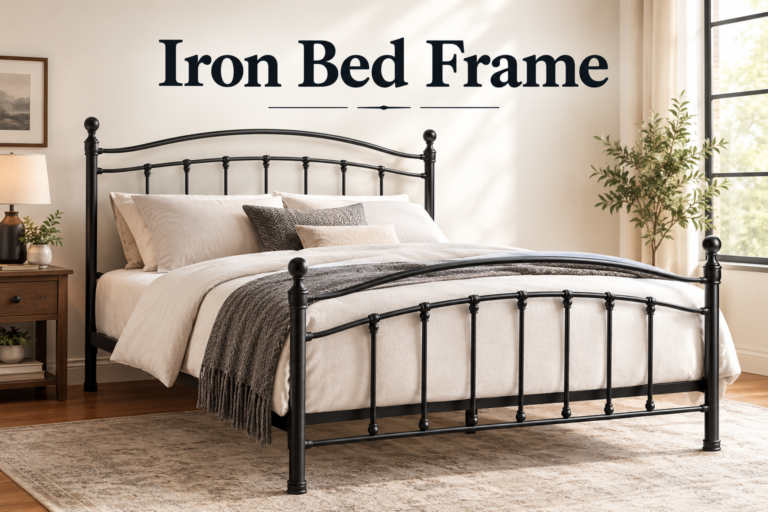
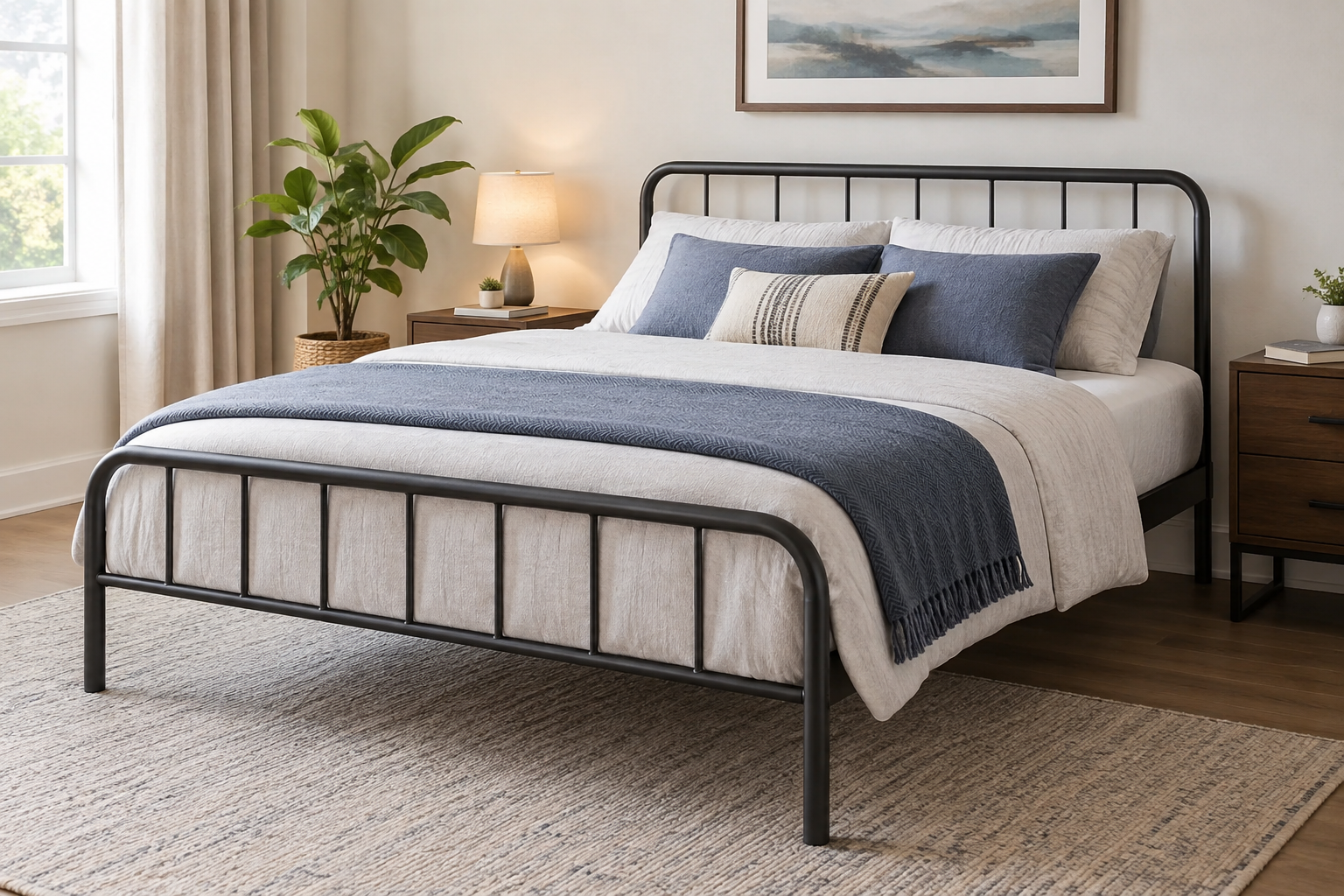
A full bed, also called a double bed, is a medium-sized bed that offers substantially more width than a twin while taking up less space than a queen. In the U.S., a standard full mattress is generally about 54 inches wide by 75 inches long (137 × 191 cm). It is particularly practical for single sleepers, teenagers, guest rooms, and bedrooms where a queen would take up more floor space.
However, there is an important shopping detail: the term “full bed” does not guarantee one universal mattress measurement worldwide. Furniture markets can use different dimensions for double or full beds, so always check the actual mattress dimensions supplied by the manufacturer before ordering a frame, mattress, or bedding.
Key Takeaways
- A U.S. standard full mattress is approximately 54 × 75 inches (137 × 191 cm).
- “Full” and “double” are commonly used as names for the same mattress size in the U.S.
- A full bed gives a single sleeper considerably more width than a twin.
- A queen is 6 inches wider and 5 inches longer than a standard U.S. full mattress.
- Full beds work particularly well in guest rooms and smaller bedrooms.
- A full bed can accommodate two people, but two adults have considerably less personal space than they would on a queen.
- The mattress size is not necessarily the same as the outside dimensions of the bed frame.
- If you are shopping outside the U.S., including Pakistan, verify the seller’s exact measurements rather than relying only on the label “full” or “double.”
What Is a Full Bed?
A full bed is a mattress and bed setup designed around a mattress that is wider than a twin but smaller than a queen. In the U.S., the standard full mattress is approximately 54 inches wide and 75 inches long. It is also commonly called a double mattress or double bed.
For a person sleeping alone, the additional width can make a noticeable difference compared with a twin. A full can provide room to move, change sleeping positions, or share the bed occasionally with a child or pet without requiring the floor space of a queen.
The best choice ultimately depends on the sleeper, room dimensions, furniture arrangement, and the exact mattress measurements available where you live.
Full Bed Dimensions
For the standard U.S. size, a full mattress is approximately:
| Measurement | Full mattress |
| Width | 54 inches |
| Length | 75 inches |
| Width in centimeters | About 137 cm |
| Length in centimeters | About 191 cm |
| Common alternative name | Double |
| Typical use | Single sleepers, teens, guest rooms |
Different manufacturers may list slightly different measurements, so use the manufacturer’s specifications when matching a mattress to a frame.
Full Bed Dimensions in Feet
A 54 × 75-inch mattress is approximately 4.5 feet wide × 6.25 feet long.
Remember that this describes the mattress, not necessarily the complete bed. A decorative headboard, footboard, side rails, or other frame components can make the overall furniture footprint larger.
Full Bed vs. Twin Bed
The biggest advantage of a full bed over a standard twin is width.
A standard twin mattress is approximately 38 × 75 inches, while a full is about 54 × 75 inches. Both have approximately the same length in the U.S., but the full provides about 16 additional inches of width.
| Feature | Twin | Full |
| Width | ~38 in | ~54 in |
| Length | ~75 in | ~75 in |
| Best suited to | One sleeper | One sleeper wanting more space |
| Bedroom footprint | Smaller | Larger |
| Common use | Children’s/teen rooms | Teen rooms, guest rooms, single adults |
Which should you choose?
Choose a twin when floor space is extremely limited, or the sleeper does not need much room.
Choose a full when you want more sleeping space without moving all the way up to a queen.
For a growing teenager, for example, a full can be a useful upgrade from a twin because it provides significantly more width while retaining a relatively compact footprint.
Full Bed vs. Queen Bed
The full-versus-queen decision is one of the most important comparisons for shoppers.
A standard U.S. full mattress is about 54 × 75 inches, while a queen is approximately 60 × 80 inches. That makes a queen 6 inches wider and 5 inches longer.
| Feature | Full | Queen |
| Width | ~54 in | ~60 in |
| Length | ~75 in | ~80 in |
| Best for | Solo sleepers, guest rooms | Couples, taller sleepers, spacious rooms |
| Space required | Less | More |
| Sleeping space | More compact | More generous |
Is a full bed big enough for two people?
Yes, two people can sleep on a full bed, but it is a relatively compact arrangement for two adults.
A full provides about 54 inches of total width, which works out to roughly 27 inches per person if two people divide the sleeping surface equally. A queen provides about 30 inches per person.
That difference may not sound dramatic on paper, but the extra width and length can make a queen more comfortable for couples, particularly for people who move around during sleep or prefer more personal space.
For occasional guests, a full may be perfectly reasonable. For a couple’s primary bed, a queen is often the more practical choice when the bedroom has enough space.
Who Is a Full Bed Best For?
A full bed is particularly useful for:
1. Single adults
A full gives one sleeper significantly more width than a twin without requiring the footprint of a queen.
2. Teenagers
Teens who have outgrown a twin may appreciate the additional width of a full.
3. Guest rooms
A full bed is a practical option when you want comfortable accommodation while preserving space for other furniture.
4. Small bedrooms
A full can leave more usable floor area than a queen, which can be helpful when the room also needs a wardrobe, desk, dresser, or other furniture.
5. Children sharing occasionally
A full can offer more space than a twin when a parent occasionally sleeps beside a child.
6. Couples with limited space
A full can work for some couples, but it should be considered a space-saving compromise rather than equivalent to a queen.
Is a Full Bed Suitable for Adults?
Yes. A full bed can be suitable for an adult, especially a person who sleeps alone.
The main consideration is length. A standard U.S. full is 75 inches long, while a queen is 80 inches. Taller sleepers may therefore prefer the additional five inches of a queen. Sleep Foundation notes that people around 6 feet tall or taller may find the 75-inch length limiting.
If you are shopping for yourself, don’t look only at the bed label. Consider:
- Your height
- Your sleeping position
- Whether you move around at night
- Whether you sleep with a pet
- Whether another person will regularly share the bed
- How much floor space you have available
How Much Bedroom Space Does a Full Bed Need?
There is no single room-size rule that works for every layout because the frame dimensions and surrounding furniture vary.
Instead of asking only whether the mattress technically fits, plan for walking space and furniture clearance around the bed.
For example, a room may physically accommodate a full mattress but become difficult to use once you add:
- Bedside tables
- A wardrobe
- A dresser
- A desk
- A chair
- Door swing clearance
- Closet access
A useful approach is to mark the mattress footprint on the floor with painter’s tape before buying the bed. Then place temporary markers where other furniture will sit.
This gives you a better idea of whether the finished room will feel comfortable rather than simply confirming that the bed fits.
Full Mattress vs. Full Bed Frame: What Is the Difference?
This distinction is easy to overlook.
A full mattress has standardized target dimensions, while the outside dimensions of a full bed frame can be larger.
For example, a frame with a wide headboard, thick side rails, or a footboard can extend beyond the mattress on several sides.
Before buying a mattress and frame separately, check:
- The mattress width.
- The mattress length.
- The frame’s required mattress dimensions.
- The usable interior area where the mattress sits.
- The overall outside dimensions of the assembled frame.
- The recommended mattress thickness.
- Whether the frame requires a foundation or specific slat arrangement.
Never assume that two products will fit simply because both are described as “full size.”
Full Bed Sizes Can Vary by Country
This is especially important if you are buying furniture online or from an international seller.
In the U.S., “full” generally refers to a mattress around 54 × 75 inches. But mattress and furniture terminology can differ between countries and manufacturers.
For example, some furniture sellers in Pakistan use “full,” “double,” or similar terms for mattresses around 60 × 78 inches. This means you should not order a U.S.-sized mattress or frame based solely on the word “full.”
If you are buying a full bed in Pakistan
Ask the seller for the exact:
- Mattress width
- Mattress length
- Bed-frame outside width
- Bed-frame outside length
- Mattress thickness recommendation
- Internal mattress platform dimensions
This simple check can prevent one of the most frustrating furniture-buying problems: receiving a mattress that does not properly fit the frame.
What Mattress Fits a Full Bed?
A mattress should match the specific dimensions required by the bed frame.
If your frame is designed for a standard U.S. full mattress, look for a mattress marketed as full size and verify its actual width and length before ordering.
Do not choose a mattress solely by the word “full.” Product listings can differ slightly, and international furniture terminology is not always standardized.
Also check the mattress thickness. A very thick mattress can change how a headboard or footboard looks and may affect how easily you get in and out of bed.
What Sheets Fit a Full Bed?
For a standard U.S. full mattress, you should generally shop for full-size bedding, including:
- Full fitted sheet
- Full flat sheet
- Full comforter or duvet
- Full mattress protector
But again, check the actual mattress measurements, particularly when buying bedding for a locally manufactured bed.
A fitted sheet needs to accommodate not only the mattress’s width and length but also its depth, meaning the thickness of the mattress. Deep-pocket sheets may be necessary for thicker mattresses.
Advantages of a Full Bed
A full bed can offer several practical benefits.
Space efficiency
It gives a single sleeper more room than a twin without taking as much floor space as a queen.
Versatility
A full works in bedrooms, guest rooms, teenagers’ rooms, apartments, and other spaces where flexibility matters.
More sleeping room for one person
The extra width can make a full feel considerably less restrictive than a twin.
Potentially easier room planning
Compared with a queen or king, a full leaves more room for other furniture and walking paths.
Good middle-ground option
For a single sleeper, a full sits between a twin and queen in both physical size and sleeping area.
Potential Disadvantages of a Full Bed
A full isn’t automatically the right choice.
It may be cramped for couples
Two adults have less personal sleeping width than they would on a queen.
Limited length for taller sleepers
At approximately 75 inches long in the standard U.S. size, a full may not provide enough length for taller people.
Less room for future needs
If you expect the bed to become a long-term shared bed, choosing a queen initially may be more practical.
Terminology can be confusing.
“Full,” “double,” and local mattress-size terminology do not always correspond perfectly across markets.
How to Choose the Right Full Bed
Use this simple process before buying.
Step 1: Measure the room
Measure the length and width of the bedroom.
Don’t forget doors, windows, wardrobes, closets, and other fixed obstacles.
Step 2: Decide who will sleep on it
A full bed is particularly straightforward for one sleeper. If two adults will use it every night, compare it carefully with a queen.
Step 3: Check your height
If you are tall, compare the 75-inch full length with the approximately 80-inch length of a standard queen.
Step 4: Measure the furniture footprint
Find the outside dimensions of the complete bed frame rather than assuming they match the mattress.
Step 5: Confirm the mattress size
Ask for the exact mattress dimensions in inches or centimeters.
Step 6: Check bedding availability
Make sure appropriately sized sheets, mattress protectors, blankets, and other accessories are readily available where you live.
Step 7: Consider future use
If the bed is for a guest room or teenager, a full may be ideal. If it will eventually become a couple’s primary bed, a queen may provide better long-term flexibility.
Common Full-Bed Buying Mistakes
Mistake 1: Confusing mattress size with frame size
A “full bed” is furniture, while the mattress has its own dimensions. The complete frame is usually larger.
Mistake 2: Assuming every full bed has identical dimensions
Always verify the manufacturer’s measurements, especially when buying internationally.
Mistake 3: Forgetting mattress thickness
A sheet or bed frame designed around one mattress depth may not work as expected with a much thicker mattress.
Mistake 4: Choosing a full for a couple without considering personal space
A full can technically sleep two people, but that does not mean it will feel spacious.
Mistake 5: Measuring only the bedroom entrance
The bed must not only fit in the bedroom—it also needs to pass through doors, stairways, hallways, and other access points during delivery.
Expert Tips for Buying a Full Bed
Measure twice, order once. Write down both the mattress dimensions and the complete frame dimensions before placing your order.
Prioritize the mattress fit. A beautiful frame is not useful if the mattress does not sit correctly inside it.
Think about the complete room. Leave enough space to open drawers, walk around the bed, and access wardrobes and doors.
Consider who will use the bed five years from now. Furniture is a long-term purchase, so future needs can matter as much as today’s requirements.
For local purchases, use centimeters as well as inches. This reduces confusion when communicating measurements with furniture manufacturers.
Frequently Asked Questions
Is a full bed the same as a double bed?
Yes, in the U.S., the terms full and double are commonly used for the same mattress size, approximately 54 × 75 inches. However, terminology and dimensions can vary by country and manufacturer.
What are the standard full bed dimensions?
A standard U.S. full mattress is approximately 54 inches wide by 75 inches long, or about 137 × 191 cm. The complete bed frame will usually be larger.
Is a full bed bigger than a twin?
Yes. A standard full mattress is approximately 54 inches wide compared with about 38 inches for a twin, while both are approximately 75 inches long in the U.S.
Is a full bed smaller than a queen?
Yes. A standard U.S. full mattress is about 54 × 75 inches, while a queen is about 60 × 80 inches. A queen is therefore 6 inches wider and 5 inches longer.
Can two adults sleep on a full bed?
Yes, but a full bed provides less personal space than a queen. It may work for couples who are comfortable with a compact sleeping surface, while couples who want more room will generally benefit from a larger mattress.
Is a full bed good for a small bedroom?
Yes. A full can be a practical compromise when a twin is too narrow, but a queen would occupy too much of the room. The exact suitability depends on the frame’s dimensions and the other furniture in the bedroom.
What size sheets do I need for a full bed?
For a standard U.S. full mattress, use full-size sheets, but confirm the mattress’s exact width, length, and thickness before purchasing. International or locally manufactured beds may use different dimensions.
Are full bed dimensions the same in Pakistan?
Not necessarily. Local furniture sellers may use “full” or “double” for dimensions that differ from the standard U.S. full mattress. Some Pakistani furniture guides list full mattresses around 60 × 78 inches, so buyers should confirm the seller’s exact measurements rather than relying on the name alone.
Conclusion
A full bed is a versatile middle-ground option: larger than a twin, smaller than a queen, and particularly useful for single sleepers, teenagers, guest rooms, and bedrooms where floor space matters.
For a standard U.S. full mattress, expect roughly 54 × 75 inches. But if you are buying a complete bed frame—especially from a local or international furniture seller—always verify the actual mattress and frame dimensions.
If you’re choosing between a full and queen, start with three questions: Who will sleep on the bed, how tall are they, and how much usable bedroom space is available? Those answers will usually make the decision much easier.