Oppein Wardrobes are made by OPPEIN Home Group, a Chinese manufacturer that has been producing kitchen cabinets, wardrobes, bathroom vanities, and interior doors since 1994. The company describes itself as the world’s largest cabinetry manufacturer, offering whole-house customisation across kitchens, wardrobes, and interior storage systems. It’s headquartered in Guangzhou, China, and went public on the Shanghai Stock Exchange in 2017 under the ticker 603833. SS.
Wardrobes are one product line inside a much larger business. Oppein’s core pitch is “whole-house customization,” ordering kitchen cabinets, wardrobes, vanities, and interior doors as one coordinated project rather than sourcing each from a different supplier.
How Oppein’s Wardrobe Business Works (Manufacturer, Not Retailer)
This is the part most people searching the brand name don’t expect: you rarely buy directly from Oppein’s factory as an individual consumer. Oppein manufactures at scale in China and distributes internationally through a network of independent showrooms and dealers. The company reports thousands of showrooms and dealer stores worldwide, with products exported to well over 100 countries.
In practice, that means:
- Your local “Oppein” showroom is typically an authorized dealer or franchise partner, not an Oppein-employed branch
- Pricing, design consultation quality, installation standards, and after-sales support depend heavily on that specific dealer, not just the factory.
- Product availability (finishes, door styles, hardware options) can differ by region depending on what each dealer stocks or can import
If you’re evaluating Oppein, you’re really evaluating two things at once: the manufacturer’s build quality, and the specific local business selling and installing it.
What Materials and Construction Go Into an Oppein Wardrobe?
Oppein states its panels use E1 or CARB-compliant board; these are formaldehyde-emission standards, not indicators of solid wood construction. Like the large majority of modular/custom wardrobe manufacturers globally (including IKEA and most Western closet companies), the core material is typically melamine-faced chipboard (MFC) or similar engineered board, not solid timber, unless a solid-wood line is specifically specified and priced as such.
This isn’t a red flag on its own; engineered board is dimensionally stable, resists warping better than solid wood in humid climates, and is the industry standard for modular wardrobes. The distinction matters for expectation-setting: if a dealer markets a standard-line unit as “solid wood” without qualification, that’s worth clarifying before you order.
Oppein also states it uses HOMAG production equipment (a well-regarded German machinery brand) and cites Schuler, a German woodworking consultancy, as an advisor on its manufacturing process; both are legitimate signals of manufacturing scale and process investment, though they describe equipment and process, not a guarantee of finished-product quality in every market.
How Much Does an Oppein Wardrobe Actually Cost?
There is no single, reliable global price for an Oppein wardrobe, and any article claiming otherwise is guessing. Cost depends on:
- Country and dealer (import duties, local markup, and currency all shift final price)
- Size and layout (a single hinged-door wardrobe vs. a full walk-in dressing room are entirely different budgets)
- Board grade and finish (basic melamine vs. higher-end textured or lacquered finishes)
- Hardware (soft-close hinges and heavy-duty sliding runners cost more than basic hardware)
- Interior fit-out (drawers, pull-out racks, lighting, and shelving add up fast)
What to do instead of searching for a fixed price: request an itemized quote from your local dealer that separates board/material cost, hardware, installation, and delivery. This is the only way to compare an Oppein quote against a local competitor’s quote fairly.
Buying Through a Local Dealer: What the Process Looks Like
Because Oppein sells through dealers, the buying journey typically looks like this:
- Visit or contact a local showroom for a design consultation
- A designer measures your space (in person or via photos/video for simple projects)
- You receive a 3D layout and an itemized quote
- You confirm the order, pay a deposit, and the unit is manufactured (often in China, then shipped) or assembled from regional stock, depending on your market.
- Delivery and professional installation, usually scheduled separately from payment.
Lead times can run from a few weeks to a few months depending on whether your region has local stock or the order is manufactured to spec and shipped internationally. This is one of the most important questions to ask upfront, since it’s also one of the most common sources of dissatisfaction with large import-furniture brands generally.
Walk-In vs. Sliding vs. Hinged: Which Oppein Wardrobe Style Fits Your Room?
- Hinged-door wardrobes need clearance space in front to open but generally offer the best interior accessibility and a slightly lower cost per unit.
- Sliding-door wardrobes save floor clearance, which matters in smaller bedrooms, but the doors themselves and their track hardware are usually a larger share of the total cost.
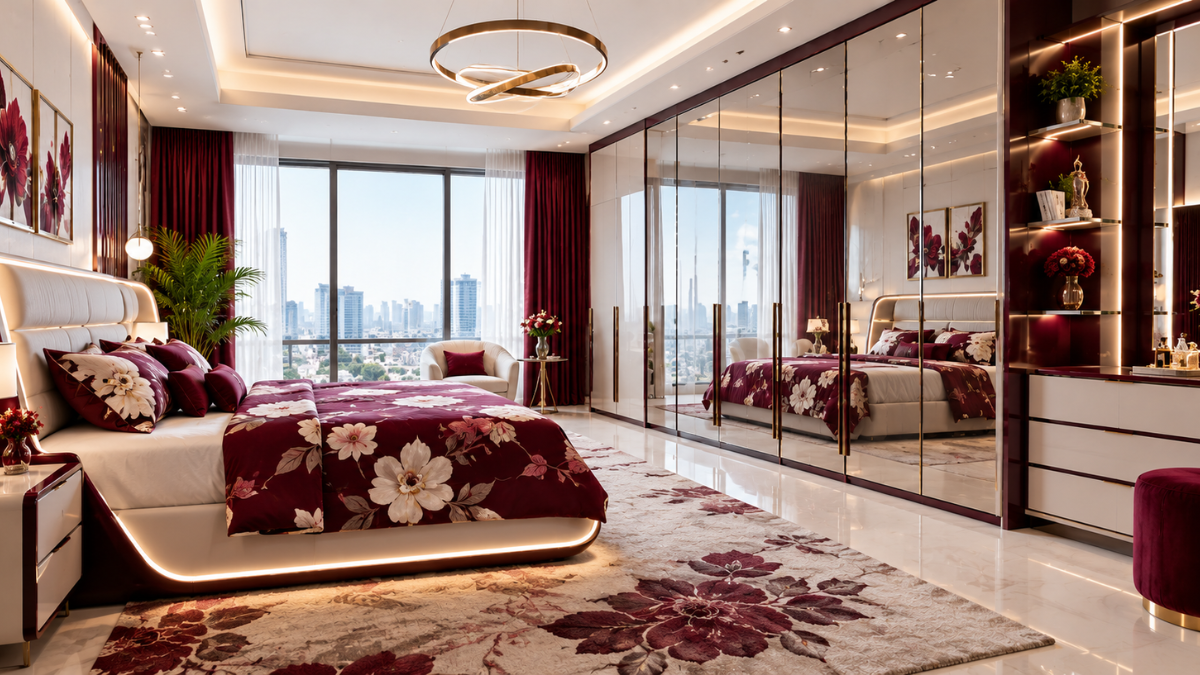
- Walk-in wardrobes/dressing rooms require the most floor area but maximize organization and are where whole-house customization brands like Oppein tend to show their strongest design work, since the layout is closer to bespoke joinery.
Match the format to your room’s clearance and traffic flow before you fall in love with a showroom display. A stunning walk-in layout in a showroom often assumes far more square footage than a typical bedroom provides.
What Oppein Does Well
- Manufacturing scale gives it more finish, layout, and hardware options than most small local shops can stock
- Whole-house coordination (kitchen, wardrobe, doors, vanities in one design language) is genuinely convenient for renovations or new builds.
- Global showroom presence means the brand is accessible in many markets where fully custom local carpentry is expensive or unavailable.
- Stated compliance standards (E1/CARB board) give a baseline to hold a dealer accountable to, in writing, on your contract.
Where Oppein Wardrobes Fall Short
- Inconsistent experience by dealer. Because service, installation quality, and communication depend on the local franchise, one region’s experience isn’t a reliable predictor of another’s.
- Import lead times. If your specific configuration must be manufactured and shipped from China, delays are a realistic risk to plan around, not just a worst-case scenario.
- “Solid wood” ambiguity. As with most global modular-furniture brands, the base material is engineered board; anyone wanting genuine solid timber needs to ask for it explicitly and expect a materially higher price.
- Limited independent, brand-specific review data. Unlike a single-market retailer, there isn’t one centralized, verifiable review base for “Oppein” globally — most reviews are scattered across individual country dealer pages, which makes due diligence more work for the buyer.
Oppein vs. Local Custom Closet Companies vs. Flat-Pack Brands
| Factor | Oppein | Local custom carpenter/joinery | Flat-pack (e.g., IKEA-type) |
| Design flexibility | High — semi-custom within their system | Highest — fully bespoke | Lower — fixed module sizes |
| Typical cost | Mid-to-upper, varies by dealer | Highest, labor-driven | Lowest |
| Lead time | Weeks to months (import-dependent) | Weeks to months (labor-dependent) | Often in-stock or short order |
| Material control | Manufacturer-set standard, verify grade in writing | Fully negotiable | Fixed by brand |
| Installation | Included via dealer, quality varies | Included, tied to the tradesperson’s reputation | Often self-assembly or paid add-on |
| Best for | Renovations wanting a coordinated whole-home look | Irregular rooms, non-standard requirements | Budget-first, standard room shapes |
No specific prices are listed because reliable, comparable figures were not available for verification; get itemized quotes from each option in your own market.
Common Mistakes When Ordering a Custom Wardrobe From Any Large Manufacturer
- Not getting board grade and hardware brand written into the contract, not just verbally described
- Assuming showroom lead times apply to your specific configuration
- Skipping a final measurement check before manufacturing begins
- Not clarifying what happens if a panel arrives damaged; replacement timelines matter more than the warranty length on paper
- Comparing a “wardrobe price” across brands without confirming whether installation, delivery, and interior fittings are included in each quote
Is an Oppein Wardrobe Worth It?
For someone renovating a whole home and wanting kitchen, wardrobe, and interior doors to share a consistent design language, Oppein’s whole-house model is a legitimate reason to consider it over piecing the project together from separate suppliers. The manufacturing scale is real and well-documented.
The trade-off is that “Oppein” as a brand name guarantees manufacturing scale and design range, but it doesn’t guarantee a specific price, lead time, or installation experience, because your local dealer determines those. Treat the showroom visit as the start of due diligence, not the end of it: get the itemized quote, confirm materials in writing, and ask directly about lead time and damage-replacement policy before committing.
Is Oppein Wardrobes Worth Using in 2026?
The core evaluation hasn’t changed with the calendar year: Oppein remains a large-scale manufacturer selling through regional dealer networks rather than a single unified retailer. What’s worth checking currently, rather than assumed from older reviews, is your specific dealer’s current lead times and import costs, since shipping and material costs shift year to year and vary by country far more than the underlying brand reputation does.
Conclusion
Oppein Wardrobes come from a real, large-scale, publicly listed Chinese manufacturer with a genuine international dealer network; the brand itself isn’t the uncertainty. The uncertainty is local: price, lead time, installation quality, and support all depend on the specific dealer you work with. Treat the brand name as a starting filter, not a final answer, and put the details that actually determine your experience board grade, hardware, delivery timeline, damage policy in writing before you commit.
You may also like: Restore an Antique Iron Bed
FAQs
Is Oppein actually a bad brand, or is that just internet noise? There isn’t reliable, centralized, brand-wide review data to make that call fairly. Quality and service vary by dealer; ask your specific local showroom for references or completed local projects rather than relying on generic online sentiment.
Should I avoid Oppein wardrobes? Not automatically but avoid ordering from any Oppein dealer (or any competitor) without an itemized written quote, confirmed board/hardware specs, and a clear damage/replacement policy. The brand isn’t the risk; an unclear contract is.
What’s the long-term impact of choosing engineered board over solid wood? Properly sealed melamine/MFC board resists warping in humid climates better than untreated solid wood and needs less maintenance, but you can’t refinish or sand it down decades later if it’s damaged the way you can with solid wood. For most bedroom wardrobes, that trade-off favors engineered board; for heirloom-quality furniture, it doesn’t.
What do most people overlook when ordering from Oppein or a similar manufacturer? Confirming whether their specific configuration is shipped from a central factory or assembled from regional stock. This single detail affects lead time more than almost anything else in the process.
How do I actually decide between Oppein and a local carpenter? If you want one coordinated design across kitchen, wardrobe, and doors, and value a wider finish catalog, Oppein’s model has an edge. If your room has unusual angles, or you want fully bespoke joinery and a single accountable tradesperson, a local carpenter is usually the better fit.