
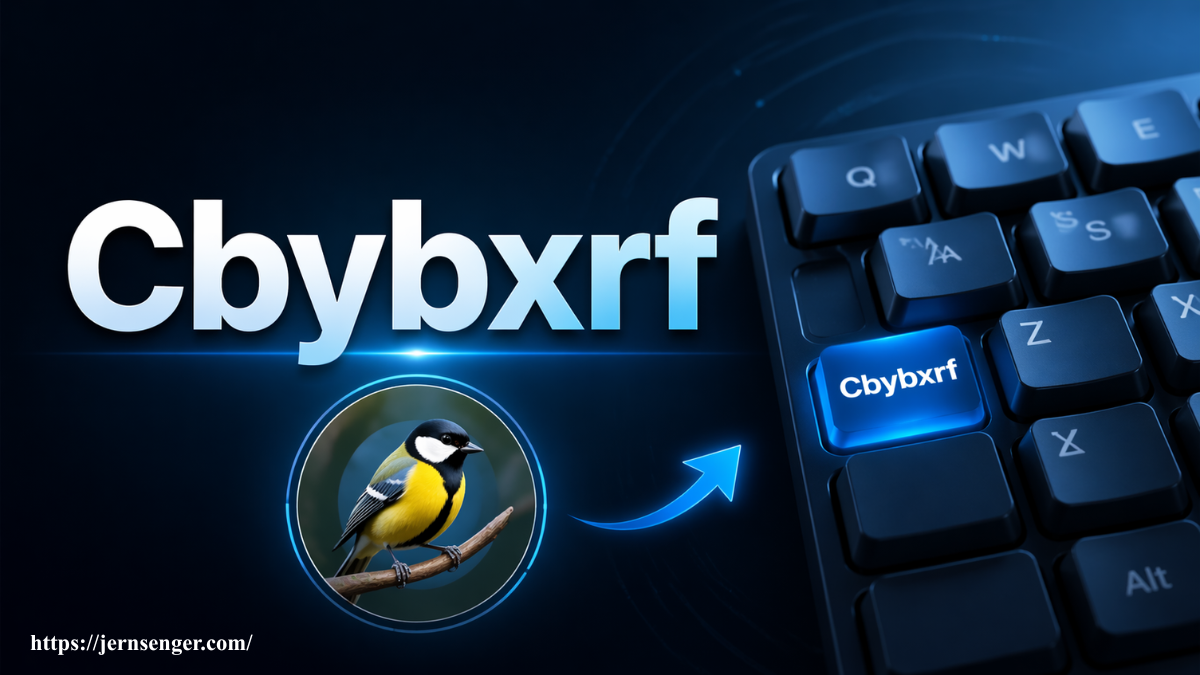
Cbybxrf meaning is simple: it’s what you get when the Russian word “синичка” (sinichka) is typed on an English keyboard. The result looks like nonsense, but the actual meaning is “little titmouse,” a small bird. If you’re wondering what Cbybxrf is, the clear answer is this: it’s not a product, tool, or concept; it’s a Russian keyboard layout mismatch error.
What Is Cbybxrf?
When someone types in the wrong input language, the system records characters based on key position rather than the intended language. This creates what linguists call a Transliteration artefact.
From what I’ve seen, most confusion comes from search engines treating this accidental string like a real keyword, which leads to misleading explanations.
Why Cbybxrf Looks Like Nonsense but Isn’t
Cbybxrf looks random because it doesn’t follow English language patterns.
In real use, this happens due to a Cyrillic-to-English typing error, where the keyboard layout is mismatched. Each letter still maps correctly—but to the wrong alphabet.
This is a classic case of input language mismatch within multilingual typing systems.
A common mistake is assuming the text is corrupted or encrypted. It’s not. It’s structured output from a different keyboard mapping system.
Key insight: It only looks random because you’re reading it in the wrong language system.
Cbybxrf = синичка: The Russian Word Behind the Confusion
The decoded word “синичка” belongs to the Russian language and refers to a small bird in the tit family.
This bird is common across Europe and especially in Russia. The word includes a diminutive suffix, making it more affectionate than literal.
In the Russian cultural context, it connects to proverbs about valuing what you have, similar to expressions used in the United Kingdom.
From a semantic perspective, this shows how a simple typing error can carry deep cultural meaning once decoded.
How a Simple Keyboard Mismatch Created Cbybxrf
Cbybxrf exists because of keyboard layout mapping differences between the Cyrillic alphabet and the Latin alphabet.
Both layouts share the same physical keys but produce different characters.
In multilingual environments, users frequently switch between languages. When they forget, the output becomes garbled text—like Cbybxrf.
From what I’ve seen, this is one of the most common multilingual communication errors, especially in fast typing scenarios.
How Russian Keyboard Layout Errors Work (With Real Examples)
The process is based on positional typing, not phonetic typing.
Each key corresponds to a fixed Cyrillic character. When typed in English mode, that same key produces a Latin character instead.
In real use, examples include:
- привет → Ghbdtn
- спасибо → Cgfcbj
This consistent mapping makes decoding possible.
Answer: It’s a predictable system error, not random text.
How to Decode Cbybxrf in Seconds (Step-by-Step Method)
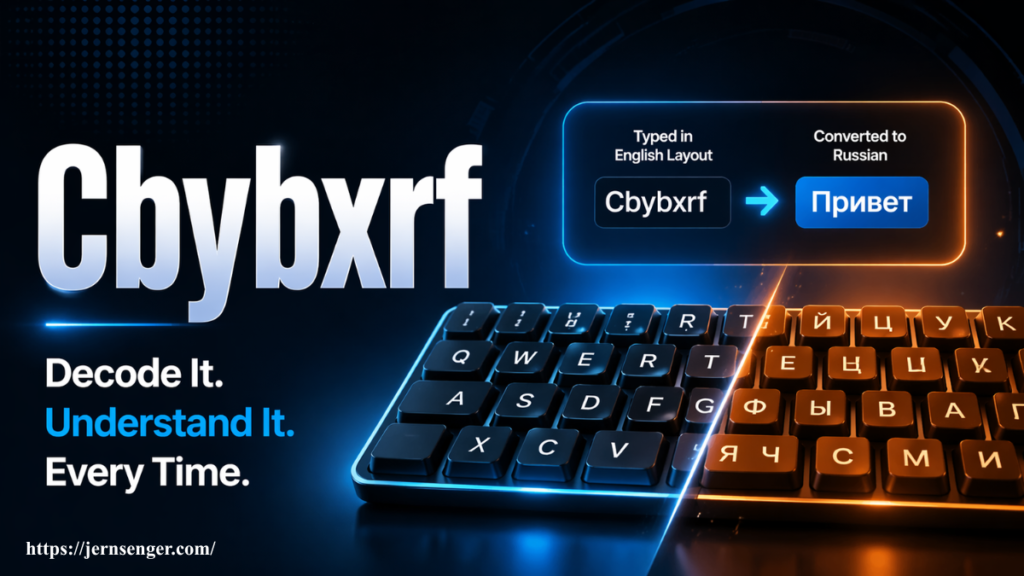
The fastest way to decode Cbybxrf is through keyboard layout conversion.
Use tools like Translit.cc or RussianTranslit to reverse the mapping. For meaning, verify with DeepL or Google Translate.
In real use, the workflow looks like this:
identify pattern → convert layout → verify language → translate meaning.
From what I’ve seen, once you learn this once, you can mentally decode short strings without tools.
Common Words Like Cbybxrf You’ve Probably Seen Before
Cbybxrf is part of a broader pattern of Russian words typed in English letters.
In multilingual communication, these appear frequently in chats, emails, and forums.
In real use, recognizing these patterns becomes a skill. It’s a form of linguistic decoding pattern recognition.
From What I’ve Seen: Why People Misinterpret Cbybxrf Online
The core issue is not the error—it’s the interpretation.
From what I’ve seen, users assume unfamiliar strings must represent new technologies or systems. This leads to speculation.
In 2026, this is amplified by AI content generation systems that create articles around low-competition keywords without verifying meaning.
This creates a cycle of misinterpreted keywords and fake definitions on the internet.
In Real Use: How Keyboard Errors Spread Across Social Media
Keyboard errors spread because they trigger curiosity.
In real use, someone posts a string like Cbybxrf, others search it, and content creators publish explanations—often incorrect ones.
Search engines like Google index this content, reinforcing the false narrative.
This is a clear example of information pollution in search.
Cbybxrf vs Fake Definitions: How AI Created a False Narrative
There are two competing explanations.
The real explanation is grounded in linguistics and keyboard mapping. The fake narrative presents Cbybxrf as a platform, system, or trend.
What competitors missed is how AI-generated content inaccuracies shape search results.
This is not just about one keyword. It reflects a larger issue in modern SEO ecosystems where demand creates meaning—even when none exists.
Key insight: Cbybxrf became a “concept” only because people searched for it.
The Linguistic Concept Behind Cbybxrf (Transliteration Artefacts Explained)
Cbybxrf is a direct example of a transliteration artefact studied in Linguistics.
It emerges from the interaction between:
- keyboard layout systems
- multilingual input systems
- character mapping logic
In localization workflows, these errors are common and expected.
From what I’ve seen, understanding this concept gives you a strong advantage in decoding multilingual text and avoiding confusion.
When Cbybxrf-Type Errors Fail to Decode Correctly (Limitations)
Not all garbled text can be decoded cleanly.
If a string mixes correct and incorrect layouts, decoding becomes unreliable. Long sentences often require context to interpret.
A common mistake is assuming every strange string is a keyboard error.
In real use, you must validate patterns before decoding.
A Common Mistake: Treating Cbybxrf as a Real Product or Concept

A common mistake is believing Cbybxrf represents a technology or framework.
This leads to:
- wrong search results
- wasted research time
- confusion in understanding
From what I’ve seen, this happens when users rely on surface-level content instead of verifying sources.
You may also like: Sruffer DB
Should You Trust What You Read About Cbybxrf Online?
You should trust only explanations that align with keyboard-mapping logic and linguistic structure.
If a source describes Cbybxrf as a platform or innovation, it is misleading.
In real use, the simplest explanation keyboard mismatch is the correct one.
Conclusion
It demonstrates how a keyboard layout mismatch can evolve into a searchable keyword, then into misinformation through AI-generated content and search indexing systems.
From what I’ve seen, the real value is not just understanding Cbybxrf’s meaning, but recognizing the broader pattern of semantic distortion in search.
Once you understand how this works, you can:
decode similar errors instantly,
avoid misleading content,
and interpret multilingual data with confidence.
FAQs
1. Is it possible that Cbybxrf actually represents something more than a keyboard error?
No, Cbybxrf does not represent anything beyond a keyboard error. The idea that it’s a system, framework, or trend comes from search-driven speculation, not evidence. The real insight is how easily meaning can be artificially created by search demand and AI content loops.
2. Should I avoid using or researching Cbybxrf altogether?
Researching it as a “topic” leads to misleading information and wasted effort. Instead, treat it as a case study in multilingual typing errors and search misinformation.
3. What is the long-term impact of cases like Cbybxrf on search and content quality?
Cases like Cbybxrf contribute to long-term information pollution in search ecosystems. As AI-generated content scales, more meaningless strings can gain false definitions. This shifts SEO from truth-based ranking to demand-based interpretation, where accuracy becomes secondary.
4. What hidden risks are associated with misinterpreting Cbybxrf?
The biggest hidden risk is building decisions on false assumptions. Misinterpreting it can lead to incorrect research, flawed content strategies, or even product decisions based on nonexistent concepts. Over time, this creates compounding errors in knowledge and credibility.
5. Why do some Cbybxrf-type errors fail to decode correctly?
They fail because not all garbled text comes from a single consistent keyboard layout. Mixed-language input, partial corrections, or intentional edits break the mapping logic. The misconception is assuming all strange text is decodable, when in reality, context and consistency determine success.