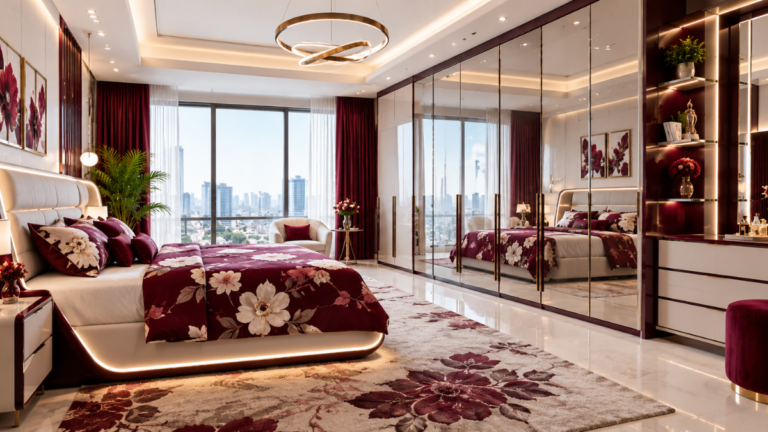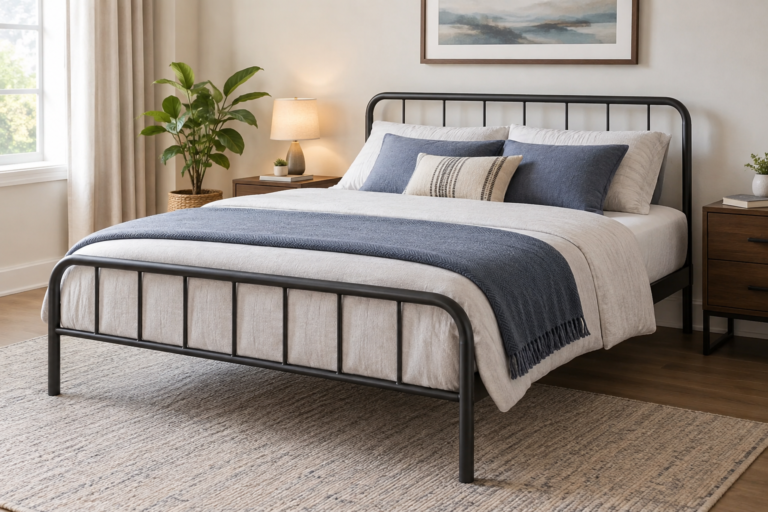
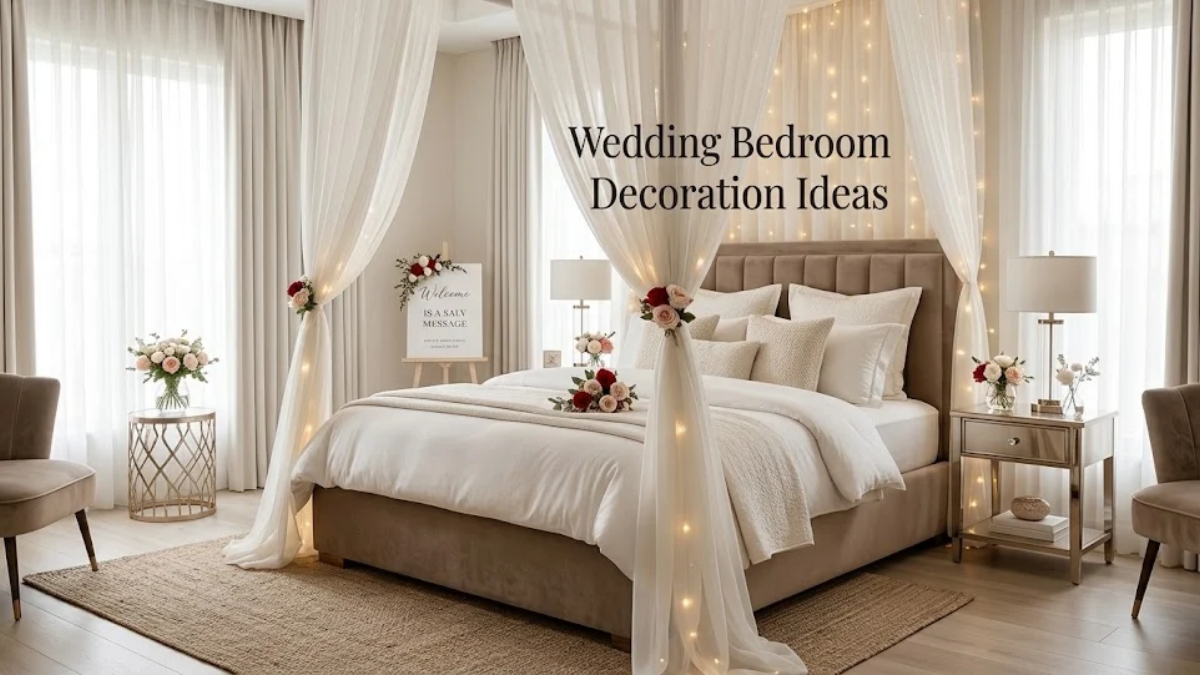
The best wedding bedroom decoration ideas focus on one clear goal: create a romantic, comfortable room without covering every surface with decorations. Start with the bed as the focal point, then build the room around soft lighting, coordinated bedding, flowers, and a simple color palette.
A wedding bedroom should look special while still feeling like a real bedroom. Too many flowers, balloons, fabrics, lights, or decorative pieces can make the space feel crowded, especially in a small room.
Choose a Style Before Buying Decorations
Decide on the overall look before purchasing anything. A classic romantic room might use white bedding, red or blush flowers, warm lighting, and soft fabric. A modern room can use neutral bedding, a few carefully placed flowers, and simple lighting. A luxury-style room might introduce richer fabrics, metallic accents, a statement headboard, or a dramatic canopy.
Choosing one direction makes shopping easier because every item has a purpose.
For a timeless appearance, combine two or three main colors rather than using every wedding color in the room. For example, ivory with blush and gold can create a softer atmosphere, while white, red, and warm wood can produce a more traditional romantic look.
Use Lighting to Change the Whole Room
Lighting is one of the easiest ways to change the atmosphere without changing furniture.
Warm fairy lights can be wrapped around a canopy, placed behind fabric, or positioned around the headboard. Small bedside lamps can provide a softer alternative to bright ceiling lights. Candles may also be used where they are permitted and can be placed safely away from bedding, curtains, and other flammable materials.
The key is layering light instead of relying on one strong source.
Current wedding-bedroom inspiration commonly features warm lights, floral arrangements, and canopy elements because they create a softer visual environment for photographs and evening use.
Create a Beautiful Bed as the Main Focal Point
The bed should normally receive the greatest attention because it occupies the visual center of the room.
Begin with clean, coordinated bedding. Add decorative cushions in complementary colors rather than mixing many unrelated patterns. A textured throw at the foot of the bed can add depth without requiring additional decoration.
A headboard can also become part of the design. Flowers may be arranged around it, while fabric can frame it or extend upward into a canopy.
Instead of placing decorations everywhere, concentrate the strongest visual details around the bed and allow the surrounding furniture to remain relatively simple.
Add Flowers Without Making the Room Feel Crowded
Flowers can instantly give a wedding bedroom a celebratory appearance, but quantity is not the same as elegance.
One large arrangement above or behind the bed can have more visual impact than small arrangements scattered throughout the room. Smaller bouquets can then be repeated on a bedside table or dresser to connect the design.
Fresh flowers offer natural texture and fragrance, while quality artificial flowers can be practical when the decoration must remain in place for a longer period.
Rose petals can also be used as a simple accent on the bed or around a carefully defined area. Existing inspiration pages frequently use petals alongside white fabric and warm lighting.
Choose Wedding Bedroom Colors Carefully
Color affects how large, warm, and dramatic the bedroom feels.
White and ivory create a clean foundation. Blush pink can soften the room, while red provides a stronger romantic contrast. Gold can add a decorative luxury accent, but it works best when used selectively.
For a smaller bedroom, lighter walls and bedding can help maintain a more open appearance. Strong colors can still be introduced through flowers, cushions, or a throw instead of covering the entire room in dark or intense tones.
The most attractive combinations usually have one dominant color, one supporting shade, and a small accent color.
Try Canopy and Draping Ideas
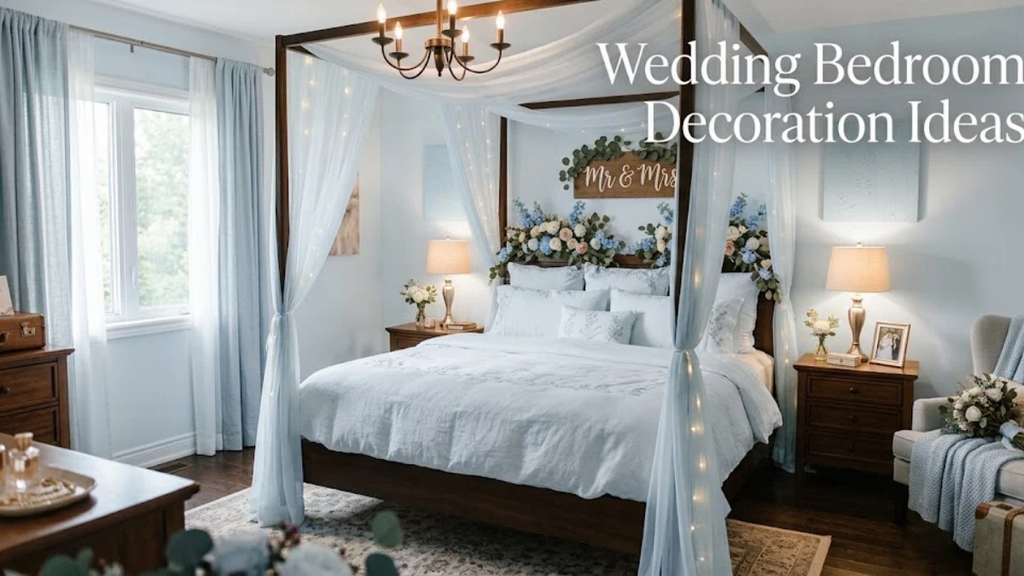
A canopy can transform an ordinary bed into the main decorative feature.
Sheer white or ivory fabric can be draped from a four-poster frame, canopy structure, or suitable ceiling arrangement. Flowers and warm lights can then be incorporated into the design.
However, the installation should be secure. Fabrics and decorations should never block ventilation, interfere with fans or lights, create a tripping hazard, or hang where they could easily contact heat sources.
For rented homes or temporary setups, removable fabric arrangements may be easier than permanent fixtures.
Decorate Small Wedding Bedrooms
A small bedroom does not require less romance; it requires better prioritization.
Start with the bed, lighting, and one main floral feature. Keep pathways clear and avoid placing large decorative objects on the floor. A wall-mounted or elevated arrangement can provide visual impact while preserving usable space.
Mirrors can also add decorative interest without consuming floor area. A simple matching bedside setup often looks better than filling every available surface.
One useful rule is to decorate vertically when floor space is limited.
Make the Room Feel Personal
Personal details can make a decorated room feel more meaningful than a generic arrangement.
A framed wedding photograph, initials, a small keepsake, a favorite flower, or a handwritten message can add personality without requiring extensive decoration.
Personalization should remain subtle. The goal is to create a room that feels connected to the couple rather than a staged event display.
Wedding Bedroom Decoration Ideas on a Budget
A limited budget does not prevent a beautiful result.
Spend more attention on the elements that dominate the room visually: bedding, lighting, and the area behind or above the bed. Decorative extras can then be added selectively.
Instead of purchasing dozens of separate accessories, choose a coordinated group of flowers, fabric, and lights that can work together. Reusable artificial flowers, removable hooks designed for suitable surfaces, fabric panels, and existing lamps can also reduce unnecessary purchases.
A recent 2026 decorating guide similarly emphasizes choosing where to invest and where to save rather than assuming an attractive wedding bedroom requires a large budget.
What to Remove Before the Wedding Night
Decoration is only half of the process. Removing unnecessary objects can make the final setup look much better.
Put away laundry, extra storage boxes, visible cables, unrelated wall items, empty packaging, and anything that visually competes with the bed.
Clean windows, mirrors, furniture surfaces, and floors before adding decoration. A beautifully decorated room can still look untidy if the underlying room has not been prepared.
Common Decoration Mistakes to Avoid
One common mistake is using too many colors. Another is covering the bed with so many flowers and cushions that it stops looking comfortable.
Excessive lighting can also weaken the atmosphere. Bright, cool lighting can make soft decorations appear harsh, while too many flashing or multicolored lights can make the room feel less refined.
Poor placement is another problem. Decorations should not block doors, windows, fans, air-conditioning units, switches, or walking paths.
Finally, avoid copying an inspiration photo without adapting it to your actual room. The size, ceiling height, wall color, furniture layout, and available light all affect the final result.
How to Set Up the Room Step by Step
Start by cleaning and decluttering the bedroom. Next, make the bed with the chosen bedding and arrange the main cushions.
After that, install the primary lighting and secure any canopy or fabric. Add the main floral arrangement, followed by smaller accents.
Then step back and look at the entire room from the doorway. This is where you can identify areas that feel empty or overcrowded.
Finish by adjusting small details such as cushions, petals, lamps, curtains, and decorative accessories. The final arrangement should feel balanced rather than perfectly symmetrical.
Conclusion
A beautiful wedding bedroom does not depend on covering the room with decorations. The strongest result usually comes from a clear focal point, coordinated colors, comfortable bedding, warm lighting, thoughtful flowers, and enough open space to keep the room practical.
Start with the bed, decide on a style, and add decoration in layers. That approach makes it easier to create a romantic room whether the space is large, small, luxurious, or budget-conscious.
You may also like: Wedding Bed
FAQs
Are wedding bedroom decoration ideas only suitable for large rooms?
No. Small bedrooms can look attractive when decoration is concentrated around the bed, walls, and lighting instead of taking up valuable floor space.
Should I avoid using red in a wedding bedroom?
Not necessarily. Red can work well as an accent color, but using it throughout the entire room can create a much stronger visual effect. Pairing it with white, ivory, or neutral tones can create more balance.
Do wedding bedroom decorations need to stay up for several days?
No. Many wedding decorations are temporary. Fabric, flowers, lights, petals, and removable decorative pieces can be installed shortly before the event and removed afterward.
What practical detail do people often overlook?
Clear walking space. A decoration may look beautiful in a photograph but become inconvenient if it blocks a door, switch, air-conditioning unit, fan, or pathway.
How can I make the room look expensive without spending heavily?
Prioritize a few high-visibility details, especially clean bedding, warm lighting, coordinated flowers, and the wall or area behind the bed. A consistent color palette often creates more impact than a large number of inexpensive accessories.