Cross-border meetings are now a normal part of business. A sales team may speak with overseas clients, a product manager may work with suppliers in Asia, and a consultant may support partners across several time zones. These meetings create opportunity, but they also add pressure. Different languages, documents, work habits, and follow-up expectations can make one discussion harder to manage than a regular internal meeting.
Staying organized in this setting is not just about taking notes. Professionals need a clear system for preparing before the meeting, communicating during the conversation, and turning information into action afterward. Tools such as iFLYTEK Translator can support clearer cross-language communication when teams work across borders, where one missed detail can delay a project, weaken a client relationship, or create confusion after the call ends.
Start With a Clear Meeting Purpose
A cross-border meeting should begin with a simple goal. Is the discussion for project updates, product requirements, negotiation, training, or decision-making? When the purpose is unclear, participants may join with different expectations and leave with different conclusions.
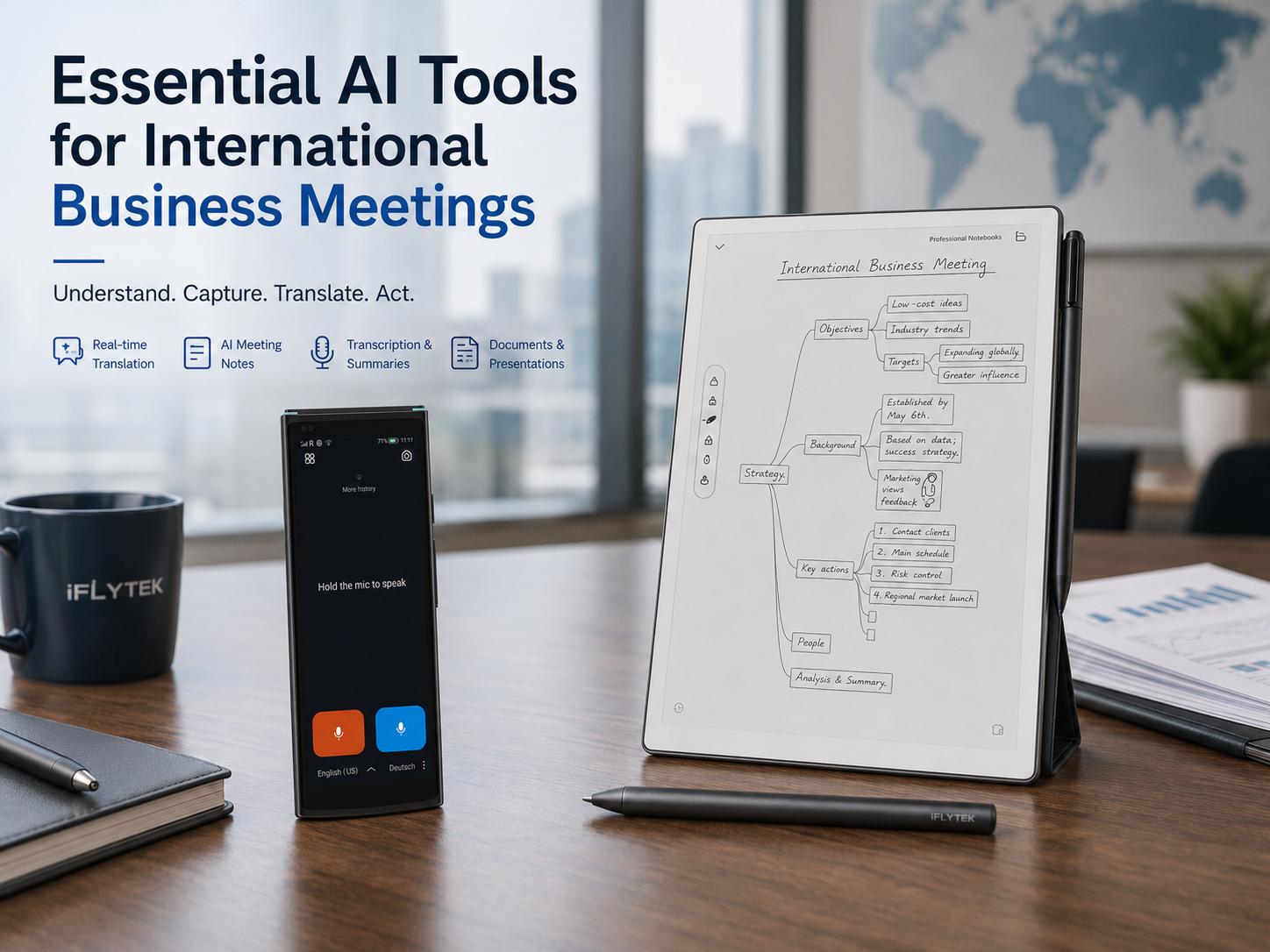
A useful agenda should list the main topics, required documents, expected decisions, and owners for each section. This gives everyone the same structure before the meeting starts. A smart notebook such as AINOTE 2 can also help professionals keep meeting notes, documents, decisions, and follow-up details easier to organize from the beginning.
Prepare for Language Gaps
Language is one of the biggest challenges in international meetings. Even when everyone uses English, accents, technical terms, local expressions, and cultural context can still affect understanding. People may understand the general idea but miss details that matter for pricing, timelines, delivery, or legal review.
Professionals should prepare for these gaps before they slow down the conversation. This can include sharing bilingual materials, listing key terms in advance, or using a dedicated translation tool during live discussions. A device such as iflytek translator can support smoother communication during client visits, supplier meetings, trade shows, and cross-border negotiations where real-time understanding matters.
The goal is not perfect translation of every sentence. The goal is to keep both sides aligned enough to ask questions, confirm details, and respond with confidence.
Capture Context, Not Just Words
Good meeting notes should capture meaning, not only sentences. This is especially important in cross-border meetings, where a small phrase may carry uncertainty, concern, or a condition that needs follow-up.
For example, a supplier may say a delivery date is “possible,” but that does not always mean it is confirmed. A client may ask repeated questions about pricing, which could signal a budget concern. A partner may agree to review a proposal but still need approval from another team.
To avoid losing this context, organize notes into clear sections: discussion points, confirmed decisions, open questions, risks, and action items. This structure makes notes easier to review and easier to share with colleagues who did not attend.
Use AI to Reduce Note-Taking Pressure
During a cross-border meeting, participants may need to listen, understand, translate, think, respond, and take notes at the same time. That creates a heavy mental load. If someone focuses too much on writing, they may miss the discussion. If they focus only on listening, they may not capture enough detail for follow-up.
AI note-taking tools can reduce this pressure by supporting transcription, summaries, handwriting organization, and document review. A smart notebook such as ainote 2 can help professionals combine natural handwriting with AI-supported meeting organization. It gives users a focused place to record ideas, review meeting content, and keep important details together.
This type of workflow is useful for managers, consultants, sales teams, legal professionals, and business travelers who handle several important conversations in one day.
Keep Documents and Notes Connected
International meetings often involve contracts, product specifications, pricing sheets, or presentations. If notes are separated from these materials, it becomes harder to understand the full context later.
A better habit is to connect notes directly with the materials being discussed. When reviewing a proposal, note the section that needs revision. When discussing a contract, mark the clause that needs legal review. When reviewing product requirements, connect the note to the exact customer request or feature.
This saves time after the meeting because the team does not need to search through multiple files to understand what happened.
Confirm Action Items and Share a Summary
One common problem in cross-border meetings is unclear follow-up. People may leave with different assumptions about who is responsible for the next step. Time zone differences can make this worse because a simple clarification may take another full day.
Before the meeting ends, confirm each major action item. Every task should include an owner, deadline, expected result, and any supporting materials. After the meeting, turn raw notes into a short summary with key decisions, risks, open questions, and next steps. For global teams, the language should be simple and direct.
Translation support can also help at this stage. When spoken or written business information needs to be clarified across languages, especially during travel or on-site meetings, having a reliable translation workflow can reduce confusion and make follow-up communication easier.
Build a Repeatable Workflow
The best way to stay organized is to use the same process every time. Before the meeting, prepare the agenda, documents, key terms, and translation support. During the meeting, capture decisions, risks, questions, and tasks. After the meeting, clean up the notes, confirm responsibilities, and share the summary.
A consistent AI note-taking workflow can support this process by giving professionals one place to write, organize, and revisit meeting information. Over time, this creates a stronger record of international projects, business discussions, and client relationships.
Final Thoughts
Cross-border meetings can open the door to new markets, better partnerships, and stronger global collaboration. Without a clear system, they can also create confusion. Professionals need to manage language differences, documents, notes, cultural context, and follow-up tasks at the same time.
AI tools make this easier by supporting translation, note-taking, transcription, summaries, and information organization. They do not replace human judgment or communication skills. Instead, they help professionals stay focused, reduce missed details, and turn international conversations into clear business outcomes.