
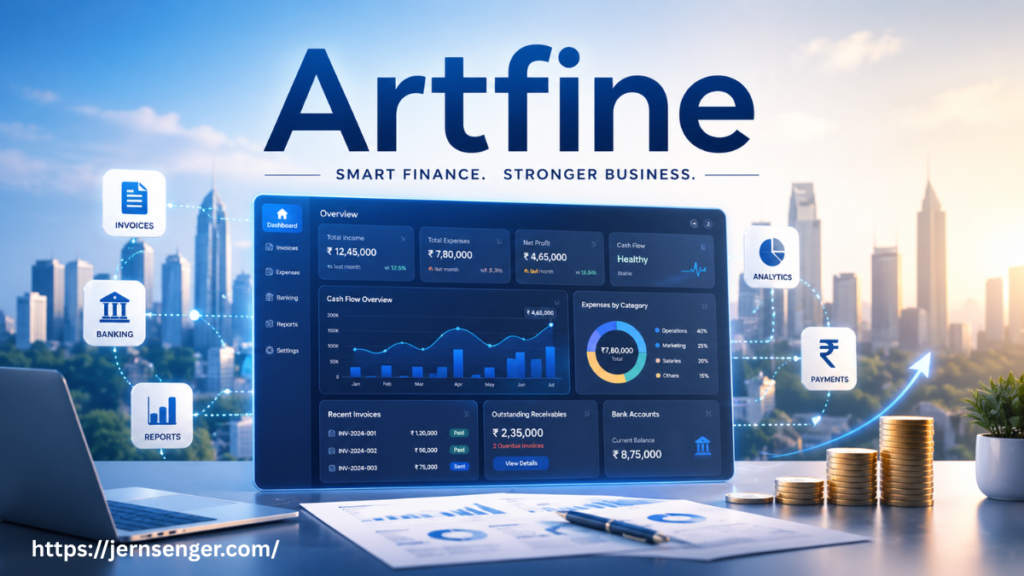
Artfine is a fintech platform that helps businesses unlock cash from unpaid invoices instead of waiting for delayed payments. In simple terms, what is Artfine? It is a system that converts receivables into immediate working capital, making it easier for MSMEs to manage cash flow and grow.
In today’s fast-moving economy, Artfine fintech solutions are becoming essential, especially in Artfine India, where small businesses often struggle with cash flow gaps, invoice payment delays, and strict bank loan requirements. This is where Artfine supply chain finance stands out by offering a faster, smarter alternative to traditional lending.
What Is Artfine? Simple Explanation for Beginners
Artfine is part of the growing Indian fintech ecosystem focused on solving the MSME growth and funding gap. Instead of relying on loans backed by collateral, Artfine uses receivable-based financing, where businesses get funds based on their invoices.
From what I’ve seen, many MSMEs face financial instability not because they lack revenue, but because their money is locked in receivables. Artfine addresses this by turning invoices into liquidity. In real use, this works as a real-world liquidity solution that helps businesses maintain operations without disruption.
How Artfine Solves MSME Cash Flow Problems
The biggest challenge for MSMEs is timing. Businesses deliver products or services but often wait weeks or months for payment. This creates supply chain liquidity stress and limits growth. Artfine MSME financing solves this through MSME working capital solutions like invoice discounting and collateral-free business finance. Instead of waiting, businesses receive funds almost immediately after raising an invoice.
A common mistake is assuming this is just another loan. In reality, Artfine focuses on transaction-based lending, meaning funding is tied to actual business activity. In real use, this leads to operational cash flow improvement, allowing businesses to pay suppliers, manage inventory, and invest in growth.
How Supply Chain Finance Actually Works
The Artfine supply chain finance model connects suppliers, buyers, and financiers in a structured system. A supplier generates an invoice after delivering goods. That invoice is uploaded to the platform, verified, and financed.
This system works within a trade finance ecosystem where the credibility of the buyer reduces risk. This is known as anchor-led financing, and it allows faster approvals compared to traditional banks. From what I’ve seen, this model is more efficient because it focuses on real transactions rather than static financial records. It improves working capital optimization across corporate supply chains.
Who Should Use Artfine? Ideal Business Types and Use Cases
Artfine India is best suited for businesses that operate within structured supply chains. This includes manufacturers, distributors, and service providers working with large companies.
In real use, companies that benefit the most are those facing delayed payments but having reliable buyers. These businesses often experience MSME credit exclusion in traditional systems, making Artfine a practical alternative. From what I’ve seen, the platform works best for businesses with consistent invoicing and predictable sales cycles.
How a Business Gets Funding Through Artfine
The funding process follows a simple and efficient real business workflow. A business registers on the platform, uploads invoices, and completes digital onboarding and verification. Once the invoice is validated, funds are released quickly.
This step-by-step invoice funding approach is significantly faster than traditional loans, which often involve long approval cycles. A common mistake is submitting incomplete or unclear invoices, which can delay processing. In 2026, however, digital lending for MSMEs has improved significantly, reducing friction and speeding up approvals.
What Businesses Gain: Speed, Liquidity, and Stability
The main benefit of Artfine fintech solutions is speed. Businesses no longer need to depend on slow bank approvals or collateral-heavy lending.
In real use, this creates better working capital optimization and reduces cash flow gaps. Businesses can operate with confidence, knowing they have access to funds when needed. From what I’ve seen, the biggest advantage is stability. Companies move from reactive decision-making to proactive growth planning.
Inside ArtfineBilz: How the Platform Automates Financing
The ArtfineBilz platform is the technological backbone of Artfine. It uses fintech automation to manage onboarding, invoice processing, and approvals.
In real use, this reduces manual errors and enhances efficiency. The platform also enables data-driven risk assessment, improving decision-making speed. What competitors often miss is that automation not only saves time but also increases transparency and trust.
Data-Driven Credit: How Artfine Assesses Risk Without Collateral
Traditional banks depend on collateral and credit history. Artfine uses alternative credit scoring, analyzing transaction data and relationships within the supply chain finance India ecosystem.
From what I’ve seen, this approach allows businesses without strong balance sheets to access funding. In real use, it reduces MSME credit exclusion and supports broader financial inclusion. This shift toward data-driven risk assessment is a key trend in modern fintech.
The Role of AP Factors in Scaling Operations
The AP Factors NBFC plays a critical role in ensuring NBFC regulation and compliance while enabling Artfine to scale its operations.
This structure supports capital markets integration and allows partnerships with financial institutions. From what I’ve seen, this combination of fintech agility and regulatory strength is essential for long-term sustainability.
Artfine vs Traditional Bank Loans: What Actually Change
The difference between Artfine and banks lies in approach. Traditional banks focus on documentation, collateral, and past financial performance.
Artfine focuses on transaction-based lending, using real-time data to make decisions. In real use, this makes financing faster, more flexible, and aligned with business operations. This shift from banking vs fintech lending is reshaping how businesses access capital.
Common Mistakes Businesses Make When Using Supply Chain Finance
One common mistake is over-reliance on financing without improving operational efficiency. Businesses sometimes use invoice financing as a permanent solution rather than a strategic tool. Another issue is the misunderstanding of costs compared to traditional loans. From what I’ve seen, maintaining proper invoice records and using financing selectively leads to better outcomes.
What MSMEs Often Overlook
Many businesses overlook risks such as dependency on a single buyer within corporate supply chains.
Another hidden issue is platform dependency, which is becoming more relevant in fintech for SMEs in 2026. What competitors often ignore is that financing solves liquidity problems but not fundamental business weaknesses.
You Might Also Like: HQPotner
Is Artfine Worth It for MSMEs in 2026?
For businesses with structured operations, Artfine MSME financing is highly effective. It improves liquidity, reduces cash flow gaps, and supports growth.
From what I’ve seen, businesses that use it as part of a broader financial strategy benefit the most. In real use, Artfine aligns with the growing demand for supply chain finance in India and digital financial systems.
Conclusion
Artfine represents a shift toward smarter, faster, and more efficient business finance. By leveraging receivable-based financing, fintech automation, and data-driven risk assessment, it solves critical challenges like delayed payments and a lack of working capital. From what I’ve seen, the real value lies in control. Businesses gain control over cash flow, which ultimately drives stability and growth. As the financial landscape evolves, Artfine is not just a tool; it is part of the future of MSME financing.
FAQs
Is Artfine always the best option for MSME financing? (Contrarian)
No, Artfine is not always the best option for every MSME. If your business has strong cash reserves or access to low-interest loans, invoice financing may be unnecessarily expensive. In real use, it works best for solving short-term liquidity gaps—not long-term capital needs.
Should I avoid using Artfine for working capital?
You should avoid Artfine if your business depends heavily on a single buyer or has inconsistent invoicing. This creates risk because financing depends on buyer reliability and transaction quality. A weak supply chain relationship can limit access to funds.
What is the long-term impact of using Artfine regularly?
Regular use of Artfine can improve cash flow discipline but may increase dependency on external financing. Over time, businesses that rely too heavily on invoice funding may avoid fixing deeper operational inefficiencies. The best outcomes come when it’s used strategically, not continuously.
What hidden risks do MSMEs overlook when using Artfine?
The biggest hidden risk is concentration exposure within supply chains. If most invoices come from one buyer, any disruption directly affects funding availability. Another overlooked factor is cumulative cost, which can quietly impact margins over time.
What are common misconceptions about Artfine that lead to failure?
A common misconception is that Artfine replaces all financing needs. In reality, it only solves liquidity tied to invoices, not broader financial planning. Businesses that ignore cost structure and overuse it often face reduced profitability despite improved cash flow.